50 stories
·
0 followers

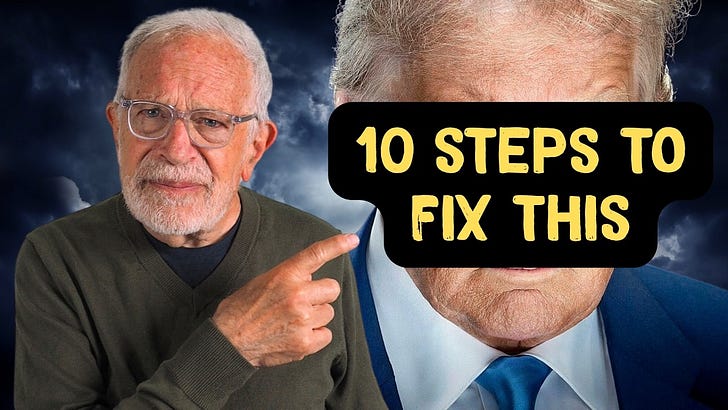
10 Steps To Fix What Trump Has Broken

1 Share

Friends,

If we want to clean up the mayhem Trump and his regime have created — and prevent anything like this from happening again — here are the 10 big reforms every political candidate should support.

They’re structural reforms in how our political system works, rather than policies such as Medicare for All, affordable housing, childcare, or a $20 minimum wage. But these structural reforms are necessary prerequisites to getting good policies enacted. They must be passed by Congress in order for anything else to get done.

I’m summarizing them below the video. Please watch and share:

Here are the 10 necessary structural reforms:

1: Enact Supreme Court term limits. Limit justices to 18-year terms, after which they return to lower federal courts.

2: Crack down on conflicts of interest. Apply federal conflict-of-interest laws to the president and vice president, ban all elected officials (and Cabinet members) from trading individual shares of stock, and require their financial holdings be put in a blind trust.

3: Stop political interference in criminal prosecutions. Prohibit presidents from influencing Justice Department prosecutions and require congressional review of pardons and commutations.

4: End the gerrymandering wars. Require all states to create independent commissions that draw congressional district maps.

5. Restore the Voting Rights Act. Reinstate protections against racially discriminatory voting maps and restore federal oversight of states with a history of voter discrimination.

6. Protect the freedom of the press. Prevent media monopolies by stopping large corporations and major media owners from buying up more news outlets.

7: Eliminate political litmus tests for federal funding. Hold the president in contempt for impounding funds appropriated by Congress. This includes funding for academic and scientific research, which should be free from political influence.

8. Tax extreme wealth. Enact a wealth tax on multimillionaires and billionaires and end the stepped-up basis loophole that allows huge fortunes to be inherited without having to pay taxes on capital gains.

9. Elect presidents by the popular vote. Replace the Electoral College through a constitutional amendment or a compact among states to award their electoral votes to the national popular vote winner.

10. Get big money out of politics. Expand public financing to match small-dollar campaign donations and pass a constitutional amendment to overturn the Citizens United decision.

Trump has revealed how easily our system can be abused. But opposing him isn’t enough. We need lasting structural reforms that make it harder for anyone — president, speaker of the House, Supreme Court justice, or other officials — to abuse their power in the future.

Please send this list to any candidate you’d like to win on November 3.

Share


Read the whole story
hoz
1 hour ago
reply
Share this story
Delete

Blood test for multiple cancers clears crucial hurdle on track to FDA approval

1 Share

If approved, the test could help catch cancers early—but more research is still needed, experts say

Read the whole story
hoz
1 day ago
reply
Share this story
Delete

This week’s Joseph N. Welch Award goes to …

1 Share

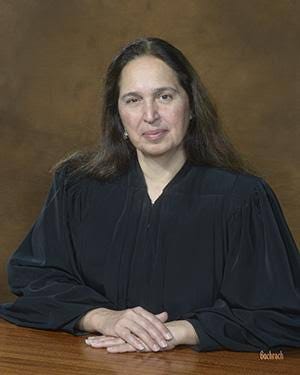
The Honorable Indira Talwani

Friends,

By now we’ve almost taken for granted that federal district court judges will probably stop — or at least pause — the worst of Trump’s authoritarian moves. We owe them a huge debt of gratitude.

Case in point: U.S. District Judge Indira Talwani, who on August 27 effectively stopped Trump’s plan to use the U.S. Postal Service to restrict mail-in voting.

In issuing a temporary restraining order blocking its enforcement, Judge Talwani used the standard two criteria for such a judicial pause: that (1) the plaintiffs are likely to succeed on their claims when the case goes to trial, and (2) they face irreparable harm in the meantime if the order is implemented.

Judge Talwani found that plaintiffs — a group of blue states and voting rights groups — were likely to succeed in their claims that Trump’s and the U.S. Postal Service’s plan is unconstitutional because it interferes with states’ authority to administer their own elections and risks disenfranchising eligible voters, and that the Postal Service lacks authority to do it. Furthermore, she found an “overwhelming risk” to Americans who need access to mail ballots to vote, and that if the plan were implemented, they wouldn’t be able to.

Her temporary restraining order blocked enforcement of the plan in the 23 states that had sued to stop it. The Trump regime immediately appealed her ruling. Days later, the U.S. Court of Appeals for the First Circuit affirmed her order, rejecting the Trump regime’s appeal.

Trump has now gone to the Supreme Court, which has not as yet issued a final decision. For now, the Postal Service is expected to handle election mail as usual. North Carolina and parts of Wisconsin have already started sending out absentee ballots for the general election.

Let me pause here for a moment to praise Judge Talwani for her principled courage. Like many district court judges who have stopped Trump, she’s undoubtedly received a great deal of criticism — some possibly in the form of violent threats — but has not received the public honor she deserves.

Talwani’s decision in this case is an example of what’s been happening across the nation, especially over the last dreadful 19 months.

The sequence has been this: (1) Trump issues a patently unconstitutional order, (2) attorneys general of blue states and various other groups go to a district court seeking to pause it until there’s a full trial on the issue, (3) a district court judge issues a temporary restraining order that pauses Trump’s, (4) Trump’s Justice Department appeals the pause, (5) an appellate court more often than not agrees with the district court judge, and (6) the Justice Department then seeks Supreme Court review.

The regime has mounted efforts in nearly all 50 states to obtain their complete voter rolls containing sensitive information about registered voters in their states, with the Justice Department arguing that the information is needed to ensure states have programs in place for maintaining accurate voter rolls.

Most have declined to provide complete lists. In response, the Justice Department has filed lawsuits against 30 states and the District of Columbia in an effort to force them to hand over the voter data.

But district court judges across the nation have held the line. (Some of these judges were appointed by Trump.) So far, the Department of Justice has lost all 23 trial-level and initial decisions. It’s an astounding record. The DOJ has appealed most of them.

This sounds like a cold-blooded process, but every step entails human beings making ethical decisions about what to do next.

Many of us have become inured to the cowardice and complicity of the people inside the regime who are acting without regard to the ethical consequences of what they’re doing — people such as those advising Trump about whether and how to draft his unconstitutional executive orders, lawyers in the Justice Department willing to defend these orders and appeal decisions that pause or stop them, and officials in other departments and agencies, such as the United States Postal Service, willing to implement them.

And most of us have become so accustomed to the courage and conviction of people outside the regime who are trying to stop these unconstitutional orders — especially district court and appellate judges — that we no longer recognize their heroism.

I’m making Judge Talwani recipient of this week’s Joseph N. Welch Award, which I give to people who — like Welch, when he confronted Senator Joseph McCarthy in 1954 — stand up to authoritarian bullies who threaten our freedoms, and who thereby protect us all.

The award really goes to all district court judges who have been holding the line against Trump. These judges deserve the appreciation of all Americans — just as those who have enabled and collaborated with the regime deserve our condemnation.

All of these people are making moral choices, whether or not they recognize them as such. Democracy is a moral choice.

Share

Read the whole story
hoz
9 days ago
reply
Share this story
Delete

President AOC?

1 Share

Friends,

One litmus test for me of potential presidential candidates in 2028 is how many people ask me if a particular person has a chance of winning. I doubt they’d ask unless they supported that person. So when lots of people start asking about someone, I begin to take that person seriously.

Over the past month, the person who’s jumped to the head of the line in these sorts of questions is Rep. Alexandria Ocasio-Cortez. Most of the people who ask me about her are under 30, and they’re hugely enthusiastic about her.

Before I give you my response, let me say something about the person in American politics she’s most associated with — Bernie Sanders — and the organization she’s most identified with — the Democratic Socialists of America.

Bernie

I’ll say it straight out: I love Bernie. For years now, he’s been leading all of us into the future. He’s given progressives a clear direction.

I love his authenticity. Some people like Trump because he says whatever he wants, but he’s an asshole. Bernie’s authenticity comes from saying what he wants and speaking the truth. Although Bernie is blunt, when he growls “this grotesque level of income and wealth inequality is immoral,” he means it. And he’s right.

I love his chutzpah. Bernie once announced that Starbucks’s anti-labor CEO Howard Schultz had agreed to testify before the Senate Committee on Health, Education, Labor and Pensions, which Bernie chaired, because he had threatened him with a subpoena if he didn’t. The National Labor Relations Board had filed more than 80 complaints against Starbucks for refusing to negotiate in good faith with its workers in more than 280 of their stores that voted to unionize. “I look forward to hearing from Mr. Schultz as to when he intends to end his illegal anti-union activities and begin signing fair first contracts with the unions,” Bernie said.

I love him because he sounds like a vintage record (even his voice has the crackle of worn vinyl).

I love Bernie because he has endless patience for important things and no patience for unimportant conversation. In 2010, he delivered an eight-and-a-half-hour speech on the Senate floor to protest the extension of tax cuts instituted during George W. Bush’s presidency. I was in the Capitol at the time and dropped by his office to congratulate him on his marathon. He quickly thanked me, then waved me off to take a phone call.

Just before the California Democratic primary in 2020, he gave a stem-winder of a speech in Oakland. We had a late dinner at a small dive on Shattuck Avenue that was empty except for the two of us, until a supporter spied us through the window and came bounding in with a Bernie poster.

“Senator, would you sign my …?”

“Not now! We’re eating!” Bernie barked.

In all my years in and around politics, I’d never come across a candidate willing to do this.

I love Bernie because he’s a true populist, a word that has gotten a terrible rap since Trump arrived on the scene but should be redeemed. It means for the people and against the powerful. Trump pretends to be a populist, but he’s always wanted to be one of the powerful since he entered politics and been in their pockets.

I love Bernie because he has almost single-handedly changed the national conversation, turning proposals that had once been on the Democratic fringe into respectable and, in some cases, mainstream Democratic positions: creating jobs by rebuilding the nation’s infrastructure; providing free tuition at public universities; breaking up the big banks; guaranteeing workers paid medical and family leave.

I love Bernie because even in his 80s his indignation hasn’t faded, nor has his energy.

When he entered Congress in 1991 as an independent, he wasn’t particularly well liked. That may have had something to do with his telling the press that Congress “is not working. It is failing. Change is not going to take place until many hundreds of these people are thrown out of their offices” and charging that “Congress does not have the courage to stand up to the powerful interests. I have the freedom to speak my mind.” Congressman Barney Frank shot back: “Bernie alienates his natural allies. His holier-than-thou attitude — saying, in a very loud voice, he is smarter than everyone else and purer than everyone else — really undercuts his effectiveness.” Joe Moakley, another Massachusetts Democrat, then chairman of the powerful House Rules Committee, complained that Bernie “screams and hollers, but he is all alone.”

Bernie’s lack of popularity on Capitol Hill didn’t hold him back. He was reelected to the House seven times and was one of the founding members and the first chair of the Congressional Progressive Caucus, which has grown steadily from six members in 1991 to 97, as of this writing.

His ascent to the Senate in 2006 was astonishing — beating the Republican candidate, Richard Tarrant, one of the wealthiest men in Vermont, by 33 percentage points.

I backed Bernie in 2016 when he ran for the Democratic nomination for president against Hillary Clinton and backed him again in 2020. I took some crap for doing this from Clinton people, but I’m glad I did it. The system needed shaking up. It needed Bernie’s candidacy even if he wasn’t going to get the nomination.

In the 2016 Democratic primaries and then again in 2020, young people all over America wore buttons reading “Feel the Bern.” They were like the young admirers of Ruth Bader Ginsburg, another warrior who combined progressive conviction with elder crankiness.

I love Bernie because he has more guts than any politician I know. Hell, he has more guts than just about anyone I know.

As far as I’m concerned, AOC couldn’t find a better role model than Bernie, and Bernie couldn’t find a better mentee than AOC.

Democratic Socialism

Which brings me to the organization AOC is most identified with, the Democratic Socialists of America.

Soon after Bernie began running for the 2016 Democratic presidential nomination, his campaign manager warned me he was about make a speech to “introduce” the public to democratic socialism. I was impressed that he had the guts to do this but worried about his timing. “Does he have to do it now?” I asked. The campaign manager told me Bernie was committed to doing it and couldn’t be persuaded otherwise. It was pure Bernie.

Ever since Franklin D. Roosevelt pushed for Social Security, Republicans have used “socialism” to scare Americans away from doing anything big that we need done.

They still are. On Wednesday, Trump and a shameful parade of Republican members of Congress up for reelection excoriated Democrats for being “soft” on “communism” and “socialism.”

Last week, the House adopted a Republican-backed resolution (introduced by Colorado Republican Rep. Jeff Crank) that condemns socialism in all its forms and explicitly names the Democratic Socialists of America. (The vote passed 220–192. Eight so-called “moderate” Democrats broke ranks to vote with Republicans.)

But America is changing. A Cato Institute poll showed that 53 percent of Gen Z have a positive view of socialism, while 45 percent view capitalism positively.

I’ve taught a large number of students who call themselves socialists, but they do so mainly because they reject capitalism — its monopolies, its treatment of workers, its disregard of human rights, its raging inequalities.

Most don’t have a clear idea of what socialism means, other than more money spent on social services, safety nets, and public investment in schools, healthcare, and the poor — and higher taxes on the wealthy to pay for all of this.

Over the past year, the youth and student branch of the national Democratic Socialists of America has seen a massive surge in membership, growing by more than 50 percent and starting more than 50 new chapters. The organization claims it now has more than 3,000 members across 160 chapters, the most in its 50-year history. But compared to the American electorate — even voters under 30 — that’s still very tiny.

DSA’s growth reflects a growing national spotlight on the organization after a string of Democratic primary wins for candidates who align with the group, from New York to Colorado.

And it follows a tense year of campus organizing by pro-Palestinian students pushing their schools to divest from Israel amid its war with Hamas over Gaza, which had been the entry point for many college students into the DSA.

The focus of young people in the DSA has centered on divestment from Israel. But that’s not all. They’re also engaged in student worker labor organizing and pushing for “sanctuary campuses,” which involves both blocking ICE from college campuses and pushing schools to end corporate sponsorships that benefit ICE.

Just as JD Vance has wide support in Turning Point USA, the conservative group founded by the late Charlie Kirk, AOC has wide support in the growing ranks of the Young DSA.

AOC

So what do I tell the growing number of people — especially young people — who ask me about AOC’s presidential chances? I tell them the truth, as I see it.

She’s an extraordinarily gifted leader. She’s also an enormously powerful communicator (I don’t know any politician more skillful on social media). I admire her progressive views and values.

I doubt the nation is ready to elect a woman in 2028, especially after Kamala Harris lost to Trump in 2024 and Hillary Clinton lost to him in 2016. But it will be ready at some point, and I hope that point comes soon.

AOC is only 36 years old (37 in October). She has plenty of time. She also has nothing to lose and much to gain by trying for the nomination in 2028. It would give her even more of a national platform and hugely valuable exposure to and experience with voters in states that she doesn’t know well.

And if she doesn’t win the nomination for president, she can always run against Chuck Schumer to become senator from New York.

Share

Read the whole story
hoz
13 days ago
reply
Share this story
Delete

Bizarre 'smartphone' in nearly century-old painting sparks wild time travel theories

1 Share

A nearly 90-year-old painting has generated online buzz and a bizarre conspiracy — that an indigenous man depicted in the artwork is holding a contemporary smartphone.

“Mr. Pynchon and the Settling of Springfield,” by Italian American muralist Umberto Romano, depicts the indigenous man alongside other tribesmen and early English colonists in 17th-century Springfield, then part of the Massachusetts Bay Colony.

“iPhone in painting from 1937 JUST DISCOVERED???” wrote one poster on X Tuesday.

“Now that one actually looks like a cell phone,” another user reportedly posted.

Illustration of an indigenous man holding a small, dark rectangular object, which some interpret as a smartphone, in the 1937 painting "Mr Pynchon and the Settling of Springfield."Time travel claims have exploded after a detail was spotted in the 1937 painting “Mr Pynchon and the Settling of Springfield.” United States Postal Service

The man can be seen front and center within the artwork, which was created in 1937. 

He stares at a rectangular device, which has a coal color on the back and what appears to be chrome or reflective trim.

X users noted last March that the mural is located in the Commonwealth of Massachusetts State Office building, which was once the Springfield Main Post Office.

The mural was one of six created for the post office, which Romano finished with students, funded by the Federal Arts Project, a 1935-1943 government program that hired visual artists during the Great Depression, according to the Smithsonian National Postal Museum.

Despite the social media speculation, historians reportedly believe the object is simply a mirror.

Mirrors were common trade items in 17th-century American colonies, which likely explains why the man appears to be studying his own reflection in the object.

“Mr. Pynchon” in Romano’s painting is one of the founders of present-day Springfield. 

Illustration of a diverse group of people, with a Native American man wearing a necklace highlighted in a red circle.“Mr. Pynchon and the Settling of Springfield,” by Italian American muralist Umberto Romano, shows an indigenous man, apparently holding a smartphone, in 17th century Springfield, Massachusetts.

Pynchon moved to North America from Essex, England, in 1590 and arrived in Massachusetts Bay Colony, where he became a founder and assistant treasurer. 

He acquired the land that would become Springfield from the Agawam Native Americans in 1636.

To ensure historical accuracy, Romano consulted with local historian Harry Andrews Wright and author Esther Forbes, intending to capture the region’s development from 1636 to 1936, according to the Smithsonian.

Rather than a single moment, the mural functions as a mosaic of the settlement’s establishment, featuring Pynchon as the central figure overseeing the interactions between the English settlers and the local Pocomtuc and Nipmuc peoples. 

While the work reflects the complex history of the area, art historians note that Romano’s semi-abstract style and deliberate choices in composition, absent anachronistic technology, are the intended focus of the piece.

Read the whole story
hoz
15 days ago
reply
Share this story
Delete

FBI Probes Service Selling 153M+ Drivers Licenses

1 Share

A new identity theft service launched on the dark web this week is selling digital scans of more than 153 million drivers licenses from people in the United States and Canada. Based on interviews with individuals whose licenses are available for purchase on this service, it appears to be siphoning images collected by a widely-used identity verification company based in Louisiana. KrebsOnSecurity also has learned that the New Orleans field office of the Federal Bureau of Investigation (FBI) today launched an official inquiry into the source of the images.

A record available at this identity theft service that includes the drivers license for U.S. Defense Secretary Pete Hegseth, who is one of several high-ranking U.S. government officials whose drivers licenses can be found for sale.

On Monday, Aug. 31, a source alerted KrebsOnSecurity to a service advertised by a new user on the Russian cybercrime forum Exploit, offering access to digital scans of identity documents on more than 170 million people in North America. The source brought it to my attention because the proprietor of this identity theft service offered my Virginia drivers license as a free sample in their initial sales thread on Exploit.

The service, dubbed Nexus, claims to have more than 153 million drivers licenses for people in the United States and Canada, as well as more than 10 million identification cards; more than three million travel documents and/or international IDs; and at least 579,000 medical cards.

A quick look around Nexus finds they are likely not exaggerating about that 153 million number: Running a blank search in Nexus (with no search parameters entered) returns approximately 11.5 million pages of results, with roughly 15 results displayed per page. It includes documents from people in both Canada and the United States, but the bulk of these records are on Americans: searching for just Canadian drivers licenses returns approximately 1.1 million results, with the largest concentration from Ontario (473,673 records).

Curiously, the identity records include not only drivers licenses but also marijuana dispensary cards. Some of the records list their “source” as “CDL,” presumably short for “commercial drivers license.” Other records carry the source notation of “CAC,” which may refer to Common Access Cards, government issued identity cards that grant physical access to government buildings and secure rooms.

The people behind Nexus claim the license images are coming from an active breach at “a major identity verification company” whose customers include multiple Fortune 500 companies.

The record totals listed by the Nexus identity theft service. The number of drivers license records increased by nearly 400,000 in the span of just 24 hours.

“We have been continuously exfiltrating new data for over a year into our private database,” the service enthused in its introductory post on Exploit. “Records are available to preview before purchase with pertinent information redacted. Customer photos are displayed if available.”

Indeed, over the past 24 hours, the number of drivers license records listed as available in Nexus has increased by nearly 400,000, suggesting that freshly stolen license data is being harvested and uploaded to this service on a semi-regular basis.

The record that features my drivers license includes six image files — three pairs of photos of the license’s front and back — a basic image scan — as well as infrared and ultraviolet versions of the same images. A date and timestamp is appended to each image file, and the timestamp on my license scan corresponds to a date in June 2025 when I took a flight to the midwest United States to attend a family funeral.

Some of the 153 million+ license scans — including mine — feature six image files with date and timestamps appended to the filenames. Not all records include photos, and some that do feature photos do not display the associated filenames.

Intent on discovering the source of this data, KrebsOnSecurity asked more than a dozen friends and family members for permission to search for their licenses in this service. Each person whose license could be found (nine of them) confirmed having traveled on or very close to the dates in the timestamps attached to their images. It is unclear what timezone these timestamps are in, but from reviewing car rental records shared by several people who helped with this research, it appears the timezone is set to Greenwich Mean Time (GMT).

At first, I thought the source of the data might have something to do with airports. However, that theory went out the window when it became apparent there were no passports in this data set. Also, only some of those who helped with this research said they showed their drivers license at the airport on the day of their travel. One person whose license was in Nexus hadn’t flown at all recently, but was renting a car from Hertz for several months around the date of their timestamp.

Two of those who agreed to help are federal employees who said they shared other forms of government identification when passing through airport security. However, those individuals each said they shared their state-issued drivers licenses later that day when renting vehicles at their respective destinations, and that both rented their cars from Hertz.

After finding a note in my calendar for the day of my June 2025 flight reminding me to bring my passport, I remembered that I also never actually shared my drivers license when I went through security at Reagan National Airport on that day because I did not yet have a Real ID, a security-enhanced drivers license that is now required by the Transportation Security Administration (TSA) for all domestic travel. Instead, I showed the TSA agent my government-issued U.S. passport.

Here’s where it gets interesting: I was able to find my mother’s drivers license in this service as well, and the timestamps for her images are just a few seconds apart from mine. That’s notable because we both handed our licenses to the Hertz rental car representative at the same time.

According to my mom, the only place she gave her drivers license to that day was the rental car company, and if memory serves that is also true for me. I don’t recall if the rental car representative inserted our licenses into any kind of machine, but I remember they held onto them for several minutes behind the counter while we were signing various forms. KrebsOnSecurity sought comment from Hertz and will update this story in the event they reply.

Zach Edwards is a well-known security and privacy researcher who recently launched a service called DecryptAds to help people better understand how online advertisers are tracking them. A scan of Edwards’s drivers license is available for purchase on this identity theft service, and Edwards said the timestamp on his record corresponds to the middle of a trip last month to Las Vegas for the annual DEFCON security conference.

Edwards told KrebsOnSecurity that although he did not rent a car in Vegas, he did hand over his license at the TSA checkpoint, at a marijuana dispensary in Vegas, and at his hotel (the Aria). But he said the only one of those three that for sure scanned his ID in some kind of device was the dispensary.

To enter Planet13’s weed dispensary in Las Vegas, one must pass through a red telephone booth. Image: Zach Edwards.

Edwards said the dispensary he visited that day was Planet13, a multi-state chain with stores in California, Florida, Illinois and Nevada. In 2022, the New Orleans-based identity provider idscan.net published a press release announcing an exclusive identity verification agreement with Planet13’s dispensaries nationally. IDScan says it processes ID verification for more than 1,000 marijuana dispensaries in 19 U.S. states.

The “trust” page of idscan.net states that the company provides identity verification services for numerous big brands, including Hertz, Target, Fedex, Motorola Solutions, the financial services giant Jack Henry, and Caesars Entertainment. And as idscan.net’s own documentation states, the technology scans IDs with both infrared and ultraviolet light. Idscan.net says the company’s systems and technology perform more than 21 million verifications monthly, at more than 20,000 locations around the world.

Image: idscan.net.

Contacted by KrebsOnSecurity, idscan.net said it was investigating the matter, but the company has not yet shared an official statement or a substantive reply to specific questions sent via email.

“At this point I’m not able to share any additional information, but the updates you have provided have been welcome, and helpful to our team’s investigation,” wrote Jillian Kossman, a marketing and operations leader at idscan.net.

During the course of my research for this story, word apparently got around to the FBI that I was poking at the apparent source of this new identity theft service’s data. Probably they were tipped off when I shared with a trusted source that Nexus also is selling the drivers license information for the assistant director of the FBI (I did not find FBI Director Kash Patel’s license in Nexus).

Earlier this afternoon, I was added to a conference call with a half-dozen FBI agents, including senior leaders from the agency’s cyber division. During that call, the FBI shared that earlier today their New Orleans field office opened an official investigation into an apparent breach involving idscan.net.

Edwards said that as more in-person and online experiences require sharing drivers licenses, vendors who collect this sensitive data need to be held to a higher standard.

“This episode should further strengthen the resolve for people who are fighting back against online ID schemes which are requiring countless providers to ask for drivers licenses in order to access services under the guise of protecting kids,” Edwards told KrebsOnSecurity. “These systems are putting sensitive data into more and more 3rd party vendors, and we don’t have nearly the oversight to ensure they are safe.”

Larry Baldwin is principal intelligence researcher at the cybersecurity firm Cybera. Baldwin said a front and back scan of his drivers license available at Nexus contains timestamps that correspond to the date of a car rental from Hertz on a recent vacation.

Baldwin said the Nexus identity theft service presents multiple serious security and privacy threats, noting that state-issued drivers licenses are commonly used as proof of one’s identity when opening new lines of credit. Baldwin said the service could also dangerously expose many people who do not wish to be found but who cannot meaningfully change their appearance (or at least not enough to fool today’s AI-based image matching tools).

This category of people, he said, includes those fleeing domestic violence, and even people who have been assigned a whole new life and identity as part of the federal government’s witness protection program, which is generally reserved for criminal defendants in racketeering and conspiracy investigations who agree to cooperate with federal authorities.

“Just when it seems like we’re making some headway in improving authentication controls through drivers license verification systems, this happens and the very thing those improvements are dependent on are compromised,” Baldwin said.

This is a potentially fast-moving story. Any changes or updates will be noted here along with a timestamp.

Read the whole story
hoz
22 days ago
reply
Share this story
Delete
Next Page of Stories