30 stories
·
0 followers

Our Truth, His Treason

1 Share
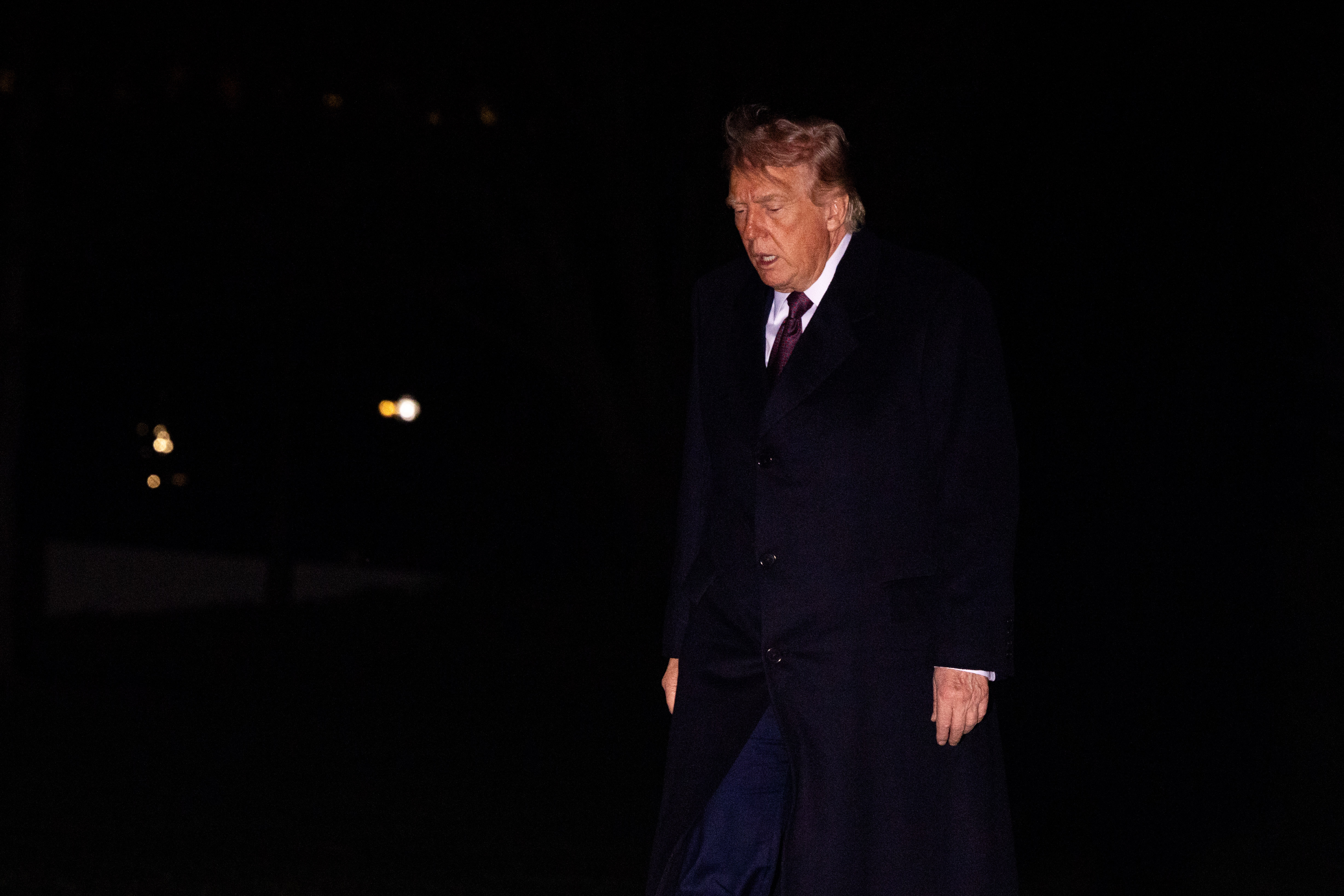
Credit: Getty Images

Three weeks into the war with Iran the president’s lies are adding up, and the cracks are showing.

At the most important juncture of the Trump presidency, here’s where we are: the Strait of Hormuz remains effectively closed, oil prices keep rising, the media is coming down hard on the president. And Donald Trump is losing the plot. He spent the wee hours of the morning raging at reporters on social media.

Hey, don’t blame the messenger. Consumers can see for themselves how badly it’s going as they watch numbers spin ever upward at the pump.

None of this will get better as long as Trump and his allies keep lying. After so many years of this shell game, why would anyone believe anything they say? Most of Trump’s lies are just fuel for his massive ego and eye-roll worthy, but a fact-free war zone is especially dangerous on a large scale.

At a time when American lives are on the line and the world economy is in peril, we need truthful information from the Trump administration. We are getting anything but.

When Trump recognizes that he is failing, he doubles down on his signature move: lie, (more than usual) and push his lackeys to lie more too. When the lying fails to budge the needle, go after the people calling out his lies, the media.

Share

It’s a good thing Trump doesn’t play poker, because his feeble moves were on full display over the weekend.

Let’s start with Trump’s personal propaganda blasts in which he spewed a number of false and furious social media posts. In one, he claimed “about seven” countries are sending warships to the Persian Gulf to assist the U.S. military in safeguarding the Strait of Hormuz. According to Politico, none of those countries — Japan, Britain, France, South Korea, or Australia — are currently sending anything to the Gulf other than best wishes. Several countries have explicitly said no.

Trump even suggested China, Iran’s ally, should help because why should the U.S. maintain “the Hormuz Strait when it’s really there for China and many other countries.” You can practically hear them laughing in Beijing.

Since he can’t lie about the actual price of oil, he consults his notoriously inaccurate crystal ball for what will happen next. On Sunday, he told NBC News, “I think they’ll go lower than they were before, and I had them at record lows.”

One, the lowest oil prices on record did not happen during either of his terms. Two, he knows that most economists believe that there is little chance, if any, that oil prices will go down below their pre-war levels when the conflict ends.

The president said on Monday that U.S. attacks have led to a “90 percent reduction” in ballistic missile launches from Iran. Yet, also on Monday, Qatar intercepted more than a dozen such missiles.

The bellicose Secretary of Defense toed the company line. “America is winning decisively, devastatingly, and without mercy… We will show no quarter for our enemies.” Either Pete Hegseth doesn’t know that “no quarter” means to take no prisoners by killing everyone, or he is committing war crimes.

Hegseth, who was always happy to play fast and loose with the truth during his time at Fox “News,” says Iran’s military is “nearing complete destruction.” So how do they keep shooting back?

Making the rounds on the Sunday talk shows, Energy Secretary Chris Wright reiterated the administration’s spurious assertion of “short-term pain for long-term gain.”

“Americans are feeling it right now. Americans will feel it for a few more weeks,” Wright said on NBC’s “Meet the Press.” He can’t know that.

Before last week, Iran had never formally closed the Strait of Hormuz, one of the greatest risks to the global energy supply. So the worst-case scenario happened in response to Trump’s war.

You can almost set your watch by Trump’s reaction to the media coverage of his mounting fabrications. As his propaganda efforts expand and outright lies mount, so does his media-bashing.

In the last 48 hours he: accused the press of rooting against the United States; suggested media outlets “be brought up on Charges for TREASON;” called the media “pretty criminal;” accused the Wall Street Journal of running an intentionally misleading headlines (it wasn’t); and called ABC News “maybe the most corrupt news organization on the planet.”

The last was in response to tough but fair questioning by ABC’s Mariam Kahn during the press gaggle on Air Force One as Trump flew from his Florida resort to Washington on Sunday.

She asked him about the appropriateness of using a photo of himself at a dignified transfer of U.S. service members killed in Kuwait in a fundraising email. He answered with a curt yes, then asked who she was with.

She answered but didn’t cower and continued to pepper him with questions about the war. He quickly grew angry, lashing out with aggressive finger-pointing and a shush.

Trump received assists from two of his most loyal minions in war against the press.

On Saturday, Brendan Carr, chairman of the Federal Communications Commission, trampled the First Amendment while threatening television news organizations. “Broadcasters must operate in the public interest, and they will lose their licenses if they do not,” claiming that some media outlets were “running hoaxes and news distortions,” he posted on social media.

While federal law bars the FCC from using its licensing authority to censor free speech, that doesn’t mean Trump and Carr won’t try.

Over at the Pentagon, Hegseth was berating CNN for suggesting that Trump had underestimated Iran’s capability to disrupt oil routes through the Strait of Hormuz. He called the assertion “patently ridiculous.” On any given day, there were 130 ships passing through the strait. Now there are none. As Iran’s Revolutionary Guard broadcast over their ship radios, “From now on, all navigating through the Strait of Hormuz is forbidden.”

Then Hegseth openly admitted that Trump’s backing of David Ellison’s bid to buy Warner Bros., which includes CNN, was to curtail criticism. “The sooner David Ellison takes over CNN, the better,” he griped.

Prior to launching the war, the president was not forthright about the need for or the goals of the conflict. He is paying for that now with slipping support. For starters, Trump didn’t get the usual rally-round-the-flag bump presidents normally receive at the beginning of an armed conflict.

In the most recent polling, Americans object to the war by double digits, saying they feel less safe and are questioning the war’s benefits. Not to mention the war’s fatalities, including American service men and women. Nor the toll it’s having on most people’s wallets. Of course, the president claims the war is hugely popular.

Every wartime administration has sugarcoated the news, but Trump’s effort for a truth-free war is more complex and potentially life-threatening than most. Three weeks in, we know there is no quick fix and no way for Trump to lie his way out of it, as the Iranian government says it sees no reason to negotiate.

We would all like to be optimistic. Facts indicate that the outlook remains grim, at least for the moment. But they — the facts — do undercut President Trump’s propaganda offensive.

Please consider supporting my team’s efforts to protect our democracy through the power of independent journalism by becoming a paid subscriber. It’s one of the best deals on Substack. I thank you for your support!

Subscribe now

No matter how you subscribe, I thank you for reading.

Stay Steady,
Dan

Read the whole story
hoz
11 hours ago
reply
Share this story
Delete

Canada's hospital emergency rooms have hit a breaking point. Is it the new normal?

1 Share

Six days in an overflow stretcher. Beds in storage rooms. Patients dying in their seats.

No, we're not describing an episode of HBO's gritty medical drama The Pitt. These are real-life scenes playing out in Canada's emergency rooms.

From Carbonear, N.L., where a man recently died of a heart attack during a 10-hour wait to see a doctor, to Calgary, where a woman pleaded "please don't let me die" during the hours she bled onto a stretcher in the ER, hospitals are bursting at the seams as backlogs and access issues affect patient flow.

"I think we're close to the breaking point," Dr. Margot Burnell, the president of the Canadian Medical Association (CMA), told CBC News.

The issue for emergency departments is that they can't control who comes through their doors, said Burnell, a medical oncologist in Saint John, N.B. ERs are not only seeing increased numbers, but the patients that come through are also more medically complex.

This means longer wait-times both to see a doctor and to get a bed when a patient is admitted, Burnell explained. "Patient care, unfortunately, is being affected."

In Winnipeg, some patients are waiting 20 hours or more to receive care. On Thursday afternoon, the children's hospital CHEO in Ottawa had an estimated wait time of 15 hours and 47 minutes for non-urgent patients; in Summerside, P.E.I., the estimated wait time for non-urgent patients on Wednesday was more than 10 hours.

Meanwhile, the latest statistics published by Ontario Health show that patients who came to an ER in January and were admitted to hospital spent on average 20.3 hours in the emergency department before getting a bed in a ward. The average time spent on a stretcher in ERs across Quebec on Tuesday was 18 hours.

Doctors in Alberta have called for the province to declare a state of emergency over the overcrowding affecting emergency rooms, calling the situation a "crisis state."

WATCH | Patients at Newfoundland hospital have spent days in overflow:

Two women say they spent days on stretchers while at Corner Brook hospital

Two women say they spent days on stretchers after being admitted to the Western Memorial Regional Hospital in Corner Brook. One emergency room doctor says patient overflow is due to system failure.

'Breaking point'

On March 3, Kingston Health Sciences Centre (KHSC) posted a message on Facebook. "The care you receive may look a little different in the coming weeks," the message warned before going on to explain that KHSC had just recorded its highest number of admitted inpatients ever.

The post went on to warn about long wait times and noted that some patients "may be assigned to a bed in an unconventional space."

The week before, the hospital admitted 636 patients in one day, far beyond the 570 beds it had available, KHSC CEO Dr. David Pichora told CBC News at the time. He said that they were holding patients in sun rooms, the gym, storage rooms and hallways.

Kingston is far from alone. Recently, a patient in Corner Brook, N.L., described spending six days on an overflow stretcher in a windowless room, while another described spending three days on a stretcher in "a little nook in the hallway where they store towels and blankets."

In January, patients in Calgary detailed harrowing experiences waiting to be seen in ERs, including a woman who waited hours to be seen for a life-threatening postpartum hemorrhage as blood pooled beneath her.

WATCH | Edmonton woman wants answers after husband dies in waiting room:

Woman wants answers after husband dies waiting in emergency department

The Alberta government has ordered a review after a 44-year-old Prashant Sreekumar died while waiting at Grey Nuns Community Hospital’s emergency department in Edmonton.

Just a few weeks earlier, Alberta ordered an inquiry into the death of a 44-year-old man who died while waiting to be seen by a doctor for chest pain at an Edmonton emergency department.

"The stories that you're seeing coast-to-coast reflect that breaking point of the system that I think we're unfortunately seeing manifest right now," Dr. Michael Herman, an emergency physician in Ottawa and Vice Chair of the Canadian Association of Emergency Physicians public affairs committee, told CBC News.

"I've been doing this job coming up on 12 years now, and I think morale amongst the physicians is about as low as I've seen it. It's a tough time right now, to be very frank."

Ongoing pressure on the system

Canada had an average 2.5 hospital beds available per 1,000 people in 2023, according to a November 2025 report by the Organization for Economic Co-operation and Development (OECD). That's well below the average of 4.2 beds across OECD countries. It means that Canada was ranked 28th out of the 35 countries measured that year.

By comparison, South Korea and Japan had 12 beds per 1,000 people.

Every emergency department strives to provide high-quality care, Herman said, but they often can't due to system constraints.

For example, patients admitted to the hospital through the ER end up staying there because hospital rooms are being taken up by patients who can't leave due to a lack of outpatient resources like long-term care and community supports.

As a result, he said, ERs are functioning "as the de facto boarding house for the hospital."

Last month, the CEO of New Brunswick's Horizon Health warned that the number of patients housed in hospitals because they don't have a nursing home spot is getting worse, and the spillover is affecting ERs clogged with patients waiting for beds to open up.

More primary care needs

In addition, Canada has an aging, medically complex population that requires more access to primary care and chronic disease maintenance — which they aren't getting, the CMA's Burnell explained.

"For many of those illnesses, if they had good access to primary care, they might have gone in and had it treated before they became unwell," she said.

A February report from the CMA found that 5.8 million Canadians lack access to primary care. Even those with family doctors say they don't have enough access to them. Meanwhile, the November OECD report found that 9.1 per cent of Canadians reported they had unmet health-care needs, compared to the OECD average of 3.4 per cent.

None of this is new, Herman said, but now, the ongoing pressure on the system has reached a boiling point. And ERs are now the catch-all for every other access issue in the health-care system, whether it's trouble getting in for an X-ray or accessing resources for Crohn's disease.

"Emergency rooms become the conduit through which all these other issues flow," he said.

Is this the new normal?

What these hospitals are facing may sound familiar.

A few years ago, the reports were about respiratory illnesses putting pressure on hospitals. Before that, it was COVID-19, staff shortages and closures.

A few years ago, hospitals were facing pressure because of the COVID-19 pandemic, like this scene at the Humber River Hospital in Toronto on Jan. 25, 2022, when patients brought in by paramedics had to wait to be triaged in the hallway due to a crowded ER. (Nathan Denette/The Canadian Press)

In 2007, CBC reported on emergency rooms "bursting at the seams."

That same year, the Canadian Institute for Health Information released a report describing patient flow issues as a factor in admitted patients sometimes waiting up to 24 hours for acute care beds.

In each of these instances, health-care professionals described hospitals at a breaking point.

"We've been telling the same story coming up on decades now," Herman said. "I think we're making it the new normal. I don't think it has to be the new normal."

"It's an unfortunate norm that we really want to work on to improve," Burnell said.

All of this paints a pretty bleak picture of the current state of Canadian health care, but Burnell and Herman agree there are solutions.

WATCH | Long wait times shouldn't be normalized, ER docs say:

St. Boniface ER doctors fear long wait times normalized

Emergency physicians who've worked for years at Winnipeg's St. Boniface Hospital say an expanded emergency department won't solve the underlying issues causing long wait times.

They start with dialogue at every level of government, as well as within the communities and health-care facilities themselves, they said.

Providing more primary care and long-term care services needs to be part of the solution, according to Herman, who also says Canada needs more doctors and more hospital beds, so staffing, training and infrastructure need to be priorities.

"Every physician wants the best care for their patients," Burnell said. "It's going to take some time, but there are solutions."

Read the whole story
hoz
2 days ago
reply
Share this story
Delete

The War Widens and Worsens

1 Share
Credit: Getty Images

It would be easy to say the president grossly miscalculated the Iranians’ ability to withstand war, but that assumes he calculated anything at all. This is a war executed on a whim, and Donald Trump could lose it.

The United States and Iran are playing an extraordinarily expensive game of chicken, and right now Iran is winning.

Trump may eventually retreat while claiming “victory,” but the hardliners in Tehran remain in control. They will demand concessions from the president before they stop attacks across the Middle East and allow ships to pass through the Strait of Hormuz, that narrow stretch of ocean that has a chokehold on the world economy.

While the White House doesn’t seem to have a coherent plan to fight this war, or how to end it, Iran does: inflict economic, political, and military pain until Trump utters “uncle.” They are doing a good job of it so far.

The Americans and Israelis continue to bomb Iran with no articulated endgame.

On Thursday, we awoke to images of two Iraqi tankers set ablaze by Iran in the Persian Gulf. For those of us who have watched and covered the region for years, it was a nightmare long feared, and it now means Iran and its radical clerics are calling the shots.

Don’t think so?

As we near the two-week mark, Iran has shut down the oil industry in the Gulf, causing global economic panic. On Thursday, we heard from the new ayatollah, Mojtaba Khamenei, son of the slain leader, who conceded nothing. In a statement, he vowed to keep the Strait of Hormuz closed, through which 20 percent of the world’s oil passes, as well as a host of petroleum-based products like plastics and fertilizer.

Iran is also reportedly mining the strait with explosives while successfully firing on U.S. warships and regional oil tankers. Seventeen U.S. military installations have been hit, as well as embassies in Kuwait, Saudi Arabia, and Dubai.

“Get ready for oil to be $200 a barrel, because the oil price depends on regional security, which you have destabilized,” Iran’s military commander Ebrahim Zolfaqari said, ostensibly to Trump.

The International Energy Agency (IEA), a 32-country coalition including the United States, called this “the largest supply disruption in the history of the global oil market.” Even after the IEA agreed to release 400 million barrels of crude oil, prices continue to rise.

Analysts aren’t buying Trump’s assertion that prices will “drop very rapidly when this is over.”

Diane Swonk, Chief Economist for professional services firm, KPMG, told Bloomberg News that even if the war ends in a month, disruptions to the supply chain will take far longer to resolve. She described the situation as “similar in scope, not as bad, but similar to what we saw during the pandemic when everything shut down.”

While targeting the Gulf’s energy infrastructure, Iran is also engaging in cyber warfare. An Iranian hacker group took responsibility for a cyberattack on a medical tech company based in Michigan.

Trump is trying back-channel diplomacy, but two offers for a ceasefire from U.S. envoy Steve Witkoff have been rejected by Iran.

Iran’s current leadership remains intact and not at risk of imminent demise, according to Reuters. The Iranian military may have been severely damaged but has not been stopped by days of bombardment by the U.S. and Israeli militaries. None of this sounds like “winning.”

What about Trump’s plan? Pod Save America’s headline Thursday perfectly encapsulates his schizophrenic objectives: “Trump Says War Over, Vows to Keep Fighting.”

Share

Those diametrically opposed sentiments were again relayed during his rambling, hour-plus rally in Kentucky on Wednesday evening.

At one point he said, “We got to finish the job, right?” Minutes later he boasted, “Let me tell you, we’ve won … In the first hour it was over.” And yet, the U.S. military is still engaged in high-cost combat.

In the first seven days of the war, the Defense Department spent $11.3 billion, according to The New York Times. And odds are they will be on the Hill asking for more in the coming weeks. This, despite getting a $153 billion bonus from Trump’s summer spending bill, on top of its $900 billion annual budget, its biggest ever.

Trump is also losing the public relations war.

After he suggested Iran was responsible for the missile strike that killed a school full of Iranian children, a Pentagon report said no, the U.S. was at fault. With that knowledge, a reporter asked Trump if he now takes responsibility for the attack. Trump answered, “I don’t know about it.” Khamenei apparently does, and has vowed to avenge “the blood of the martyrs.”

In a puzzling social media post on Thursday, Trump wrote, “The United States is the largest Oil Producer in the World, by far, so when oil prices go up, we make a lot of money.” Who is the “we?” Yes, he and his billionaire buddies are making out like bandits, but most of the world will suffer mightily.

Here we are, nearly two weeks in, and what Americans know about this war comes down to this: It’s costing 60 cents a gallon more to fill up the family car. Next week, it will likely cost even more.

And it’s not just gasoline. Mortgage rates are climbing again. And investors are blaming the war for jittery markets.

Then there is the Pentagon, which like the rest of the Trump administration, is less than transparent and often thin-skinned.

On Wednesday, the Department of Defense had to revise its number of wounded from fewer than a dozen to at least 140, after Reuters reported 150 U.S. soldiers have been hurt, in addition to the seven who have been killed.

But perhaps most absurdly, the U.S. military command has banned photographers from Pentagon briefings after Pete Hegseth’s staff thought photos of the secretary were “unflattering.” At least we know where their priorities are. Three of the photos they don’t approve of are above.

Whenever this unconstitutional, unpopular, and unnecessary war inevitably ends, Trump’s domestic problems will be waiting for him. He will have to face a growing list of questions about the all-but-forgotten Epstein files. He will have to contend with rising prices while he rambles from speech to speech on his “affordability tour.” And he will have to placate Republicans fighting for their political lives.

Meanwhile, we say a prayer for all American servicemembers in harm’s way. We wish them a safe return.

There is so much to tell in this story. As independent journalists, we attempt to consolidate what we believe to be the most accurate information and present a narrative that paints a clear picture of a perilous time. To remain steady we all must be informed.

Please consider supporting my team’s efforts to protect our democracy through the power of independent journalism by becoming a paid subscriber. It’s one of the best deals on Substack. I thank you for your support!

Subscribe now

No matter how you subscribe, I thank you for reading.

Stay Steady,
Dan

Read the whole story
hoz
4 days ago
reply
Share this story
Delete

AI autocomplete doesn’t just change how you write. It changes how you think

1 Share

AI-powered writing tools are increasingly integrated into our emails and phones. Now, a new study finds biased AI suggestions can sway users’ beliefs

Read the whole story
hoz
5 days ago
reply
Share this story
Delete

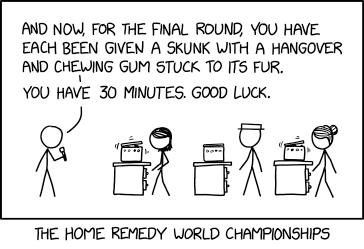
Home Remedies

1 Comment and 5 Shares
As always, you are permitted to call one person for guidance, but that person must be a grandparent.
Read the whole story
hoz
7 days ago
reply
Share this story
Delete
1 public comment
alt_text_bot
7 days ago
reply
As always, you are permitted to call one person for guidance, but that person must be a grandparent.

The Glaring Oversight in the U.S. War Plan

1 Share

The United States and Israel took at least a month to prepare their attack on Iran, assembling the largest arsenal of aircraft carriers and fighter jets that the Middle East has seen in decades. But one gap in their planning became clear during the first days of the war, as the United States and its allies used their most advanced anti-aircraft systems to shoot down swarms of cheap, easily replaceable Iranian drones.

The flaws in that approach have seemed particularly obvious to the leaders of Ukraine, who have more experience countering these drones than any other country. In the fall of 2022, Iran sold the Kremlin designs for a drone known as the Shahed-136, and Russia has since produced and launched tens of thousands of them in its war with Ukraine.

“Iranian attack drones are the same ‘shaheds’ that have been striking our cities, villages, and our Ukrainian infrastructure throughout this war,” Ukrainian President Volodymyr Zelensky said in a statement yesterday. The country’s engineers have developed a variety of ways to shoot down the drones, such as lasers and AI-enabled interceptor drones, some of which cost as little as $1,000. Their overall success rate against Shaheds stands at about 90 percent, according to Ukrainian-government estimates. “It’s our innovation,” Oleksandr Kamyshin, an adviser to Zelensky on arms production, told us this week. “And I think it would be very useful for our partners right now in the Middle East.”

But to the surprise of some officials in Kyiv, no one from the U.S. bothered to ask Ukraine to share its expertise in how to defend against drones before starting the offensive in Iran. “I have not received any direct requests,” Zelensky told reporters on Monday. “I have not discussed this with anyone.” That changed the following day, when Zelensky began a flurry of calls with U.S. allies in the Middle East, including the leaders of Qatar, Jordan, Bahrain, and the United Arab Emirates. All of their countries have faced a barrage of Iranian drones in recent days, and Ukraine has agreed to send them personnel and equipment to help defend against such attacks. “Our military possesses the necessary capabilities,” Zelensky said in a post on X yesterday. “Ukrainian experts will operate on-site, and teams are already coordinating these efforts.”

The deployment of Ukrainian weapons to help U.S. allies in the Middle East marks an astonishing reversal in military innovation, an area in which the U.S. has been the recognized leader for decades.

The American failure to adopt lessons from the war in Ukraine extends across administrations and political parties when it comes to both producing attack drones and developing the means to protect U.S. forces and assets from such attacks. Both tasks have taken on new urgency as the U.S. military confronts enemy drones on the battlefield.

Alternative means of defending against drone attacks—such as lasers—could bring down the cost of intercepting a drone from millions of dollars to a few bucks. But until recently, the U.S. had invested more in its multilayered defense against drones, which involves interceptors, combat air patrols, electronic warfare, and short-range missiles. The U.S. was planning for—and bought weapons aimed at countering—threats from far-away targets such as China, not close-range foes such as Iran.

Iran has made extensive use of its drone fleet in the opening days of the war. One attack on an American base in Kuwait led to the deaths of at least six U.S. military personnel over the weekend and wounded several others. Iran’s Islamic Revolutionary Guard Corps said yesterday that it had fired 230 drones at facilities that host American troops in the Middle East, including the U.S. embassy in Riyadh. Earlier in the week, Iranian media released footage of what appears to be a large stockpile of Shahed drones inside a tunnel. To counter the widespread assault, the U.S. is quickly depleting its limited, costly supply of interceptors—missiles that cost millions of dollars apiece, compared with $30,000 for an Iranian drone. But even if the U.S. had a surplus of Patriot missiles, they are not designed to stop a swarm of attack drones.

“There are not great defenses available to the U.S. military to defend against the Shahed,” a congressional official told us after a closed-door briefing Tuesday on Capitol Hill with senior members of the Trump administration. Defense Secretary Pete Hegseth and General Dan Caine, the chairman of the Joint Chiefs of Staff, acknowledged this gap in U.S. counter-drone technology. “So they have to use the defensives they have, which are costly,” the congressional official said. “We have known this for a long time. We don’t have, at scale, good defenses against drones.”

Iran launched more than 2,000 drones Saturday through yesterday morning, according to the Pentagon, toward both U.S. bases and Gulf allies. Although the number of Iranian missiles launched at the U.A.E. has dropped since Saturday, the number of drones has remained steady, according to statistics provided by the U.A.E.’s Ministry of Defense. During a Pentagon briefing yesterday, Hegseth said that the military was targeting “drones and facilities that produce them.” But he also said that the U.S. media were covering a drone attack that killed six troops “to make the president look bad.”

Hegseth outlined some of the U.S. defenses. “Thousands of Iranian missiles and drones have been intercepted and vaporized, tens of thousands of American and allied lives protected,” he said. “We have pushed every counter-UAS system possible forward, sparing no expense or capability.” (UAS refers to “unmanned aircraft system,” or, in civilian-speak, drones.)

The mismatch in the United States’ defenses against Iran’s drone offensive was already apparent in the U.S. campaign last summer against the Houthis, an Iranian-backed proxy in Yemen. In that weekslong conflict, the U.S. used expensive interceptors to bring down armed drones. The Pentagon has also sought to create its own alternative, cheap, one-way attack drone. At a cost of $35,000, the LUCAS (short for Low-Cost Unmanned Combat Attack System) has an eight-foot wingspan, can travel about 500 miles, and can be deployed from ships and truck-mounted launchers. But the weapon wasn’t designed to take out drones aimed at U.S. forces.

[Read: The one variable that could decide the war]

U.S. military planning for drone warfare reflects how the U.S. has traditionally fought wars and how it had been planning for a future one. During the U.S. counterterrorism wars in Iraq and Afghanistan, cheap offensive drones were not part of the arsenal. Instead, the U.S. developed the MQ-9 Reaper, an unmanned $30 million aircraft that has a 66-foot wingspan and can fly for hours, hover over potential targets, and fire on them. After that, the U.S. focused on a potential war against China, one in which it expected to deploy forces over long distances—even if an attack drone could travel thousands of miles, it would likely be shot down en route.

All the while, Iran kept expanding its drone arsenal. Tasnim, a semi-official Iranian news agency, reported in January that the nation’s armed forces had received 1,000 drones, though that could not be verified. Some of Iran’s drones are so basic that they run on repurposed lawnmower engines. To shoot them down, the U.S. and its allies have used some of their most advanced and expensive weapons, including Apache helicopters, F-35 fighter jets, and Patriot-missile batteries. The preliminary Pentagon estimate of the war’s cost is $1 billion a day, the congressional official told us, which could lead the Pentagon to request as much as $50 billion in supplemental funding.

American officials and business leaders have long known about Ukraine’s ability to shoot down Iranian drones on the cheap. Zelensky’s government has built partnerships in recent months with several European countries on the joint production of drones and interceptors. Some of the top manufacturers of these systems in Ukraine recently joined forces to create a company called UForce, which aims to make Ukrainian battlefield innovations more widely available.

UForce recently became the first Ukrainian defense start-up to close a seed-funding round, which brought in $50 million from foreign investors. Among them was Shield Capital, a Silicon Valley firm whose co-founder Raj Shah led a defense-innovation unit inside the Pentagon during Donald Trump’s first term. “Scaling this kind of proven capability is urgently relevant across the free world,” he said in a statement announcing the investment.

Oleksiy Honcharuk, the chair of UForce, told us that the company was built to bolster the defenses of Ukraine and its allies. “We need investment in our defense sector, and the West needs the best of what Ukraine has produced,” he said. Among the more promising technologies in the UForce portfolio is a software that allows small interceptor drones to lock on to moving targets and blow them out of the sky. “This is a counter-Shahed system,” Honcharuk said. “It has already been used to shoot down over 1,000 Shaheds.”

[Photos: Ukraine’s battlefield drones]

Eric Schmidt, a former CEO of Google, has also invested in Ukrainian drones and counter-drone technology, and he has lobbied the U.S. military to integrate these systems. “They’re so inexpensive. They’re so battle-tested,” Schmidt told a European security summit last month. “When you go to the factories, it’s almost like China: rows and rows and rows of people working incredibly hard 24 hours a day.”

During a visit to one such factory last month in Kyiv, the makers of the P1-Sun, one of Ukraine’s most effective drone interceptors, told us that they can produce 100,000 a month, far more than the company supplies to the Ukrainian military. Those drones may soon be en route to the war theater around Iran. “The Middle East is calling us,” Zelensky told reporters in Kyiv on Tuesday. The development seemed to surprise him. “We’re at war,” he said. “But they’re reaching out to us.”

Ukraine’s anti-drone innovations have been born, in part, from necessity. The nation has struggled to secure supplies of Patriot missiles from its Western allies. The maker of the Patriot system, Lockheed Martin, produced 620 interceptors last year and has plans to increase annual production to 2,000 over the next few years. But this still would not be enough to replenish U.S. and allied stockpiles anytime soon. Fears are already circulating at the Pentagon that the U.S. will soon burn through its arsenal of advanced air-defense systems, given the intensity of the air war in the Middle East.

Whether those fears are realized could depend on how long the war lasts. But the U.S. failure to deploy cheap and effective weapons against Iranian drones already looks like poor planning at best, and hubris at worst.

Read the whole story
hoz
11 days ago
reply
Share this story
Delete
Next Page of Stories