The black-spotted pond frog shows remarkable tolerance to venomous stings from an Asian giant hornet. The stings caused no visible harm and the frog behaved normally after predation. Credit: Shinji Sugiura / Ecosphere
Get the Popular Science daily newsletter💡
Breakthroughs, discoveries, and DIY tips sent every weekday.
In hindsight, the North American “murder hornet” (Vespa mandarinia) scare of 2020 was probably a bit overblown (not to mention culturally problematic). Of course, you still want to avoid the venomous sting from a northern giant hornet, as they’re now known. According to entomologist Masato Ono, receiving a dose of the insect’s potent, neurotoxic venom felt “like a hot nail being driven into my leg.” And while not necessarily as painful, it’s still best to keep clear of similar yellow hornets like V. analis or V. simillima.
However, some animals have no fear of a hornet’s stinger. What’s more, certain birds and spiders willingly seek the insects out as meals. Some frog species also have an appetite for hornets.
“Although stomach-content studies had shown that pond frogs sometimes eat hornets, no experimental work had ever examined how this occurs,” Kobe University ecologist Sugiura Shinji said in a statement.
The venomous stinger of an northern giant hornet (Vespa mandarinia). The venom injected by this stinger can cause sharp, intense pain as well as local tissue damage and systemic effects such as destruction of red blood cells and cardiac dysfunction, which may even be fatal. Credit: Shinji Sugiura / Ecosphere
One of the most pressing mysteries is whether or not these amphibians devour hornets in a way that avoids their stingers, or if they simply tolerate the venom. To fill in this knowledge gap, Suguira and fellow researchers recently offered all three hornet species (V. mandarinia, V. analis, and V. simillima) to hungry black-spotted pond frogs (Pelophylax nigromaculatus). The team only used each frog once, and paired them with the hornet species that corresponded to their size. The largest frogs received a roughly 1.75-inch-long northern giant hornet. They then recorded how the amphibians reacted to their potential snacks.
The results detailed in the journal Ecospherewere unambiguous. Frogs attacked and consumed V. simillima, V. analis, and V. mandarinia at a respective rate of 93, 87, and 79 percent. They didn’t avoid the stingers, either. In some cases, the frogs were even stung in the mouths and eyes.
“While a mouse of similar size can die from a single sting, the frogs showed no noticeable harm even after being stung repeatedly,” explained Suigiura. “This extraordinary level of resistance to powerful venom makes the discovery both unique and exciting.”
Frogs may have evolved to tolerate both the hornet venom and its resulting pain. Credit: Shinji Sugiura, Ecosphere
Prior studies have indicated there isn’t always a connection between pain and lethality in a venomous insect’s sting. A single sting from a bullet ant (Paraponera clavata), may make you feel like you’re dying, but you’ll most likely survive an encounter with the world’s most notoriously painful insect. Meanwhile, a common bee sting may be enough to kill someone allergic to their venom. Knowing this, Suigiura theorizes that the pond frogs used in his study may have evolved a double tolerance to both the hornet venom’s pain and toxicity.
“This raises an important question for future work,” he said. “Namely, whether pond frogs have physiological mechanisms such as physical barriers or proteins that block the pain and toxicity of hornet venom, or whether hornet toxins have simply not evolved to be effective in amphibians, which rarely attack hornet colonies.”
With the confirmation that certain frogs are more than happy to dine on stinging hornets, researchers may soon study the amphibians in the hopes of identifying their mechanisms of venom tolerance. Once better understood, the information could inform new antivenoms, as well as medical treatments tailored towards pain resistance.
2025 PopSci Outdoor Gift Guide
20+ editor-approved presents for the hikers on your list
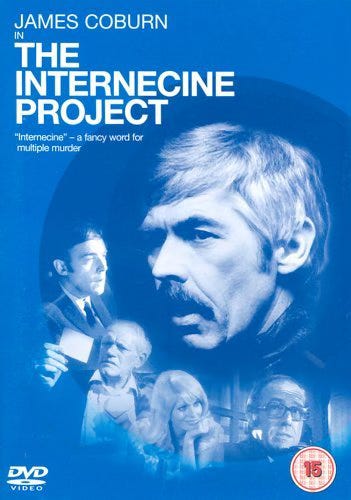
Long ago, probably in a long-forgotten hotel room, I watched a 1974 movie called The Internecine Project — now available, as you’ll see if you follow the hyperlink, on YouTube. In truth, it’s a pretty bad movie. But what made it memorable was the unusual nature of the villain, played by James Coburn: An evil, murderous chair of the President’s Council of Economic Advisers. Yes, you read that correctly – an evil, murderous chair of the CEA.
In the opening scene, Coburn is on a talk show, being quizzed about the high rate of inflation. He responds that people shouldn’t be upset about rising prices, because their incomes are rising even faster. Presumably the scriptwriters intended this to show how smarmy and cynical he is.
And that’s why Donald Trump won the 2024 election. No, Democrats didn’t lose because they use big words, or advocate for open borders, or talk too much about trans rights. None of those things actually happened to any significant degree, regardless of what Trump or the self-defeating wing of the Democratic Party says. They lost because Americans were angry about higher prices and not mollified by the fact that most people’s wages had risen more than overall consumer prices. In this coming Sunday’s primer, I’ll talk more about the underlying economics of the affordability issue, and in the following primer I’ll talk about specific strategies for Democrats to adopt to address it.
But what I want to focus on today is the politics of affordability. As current polls show, swing voters are increasingly blaming Trump, rather than Biden, for the cost of living. And the public’s ire is likely to get worse for the Republicans as time goes on.
In the summer of 2024, as Trump was lagging in the polls behind Kamala Harris, he began to repeatedly and explicitly promise not simply to reduce inflation but to deliver large declines in consumer prices: “Starting the day I take the oath of office, I will rapidly drive prices down.” Although economists warned that there was no way he could deliver on those promises, enough voters believed him to swing the election.
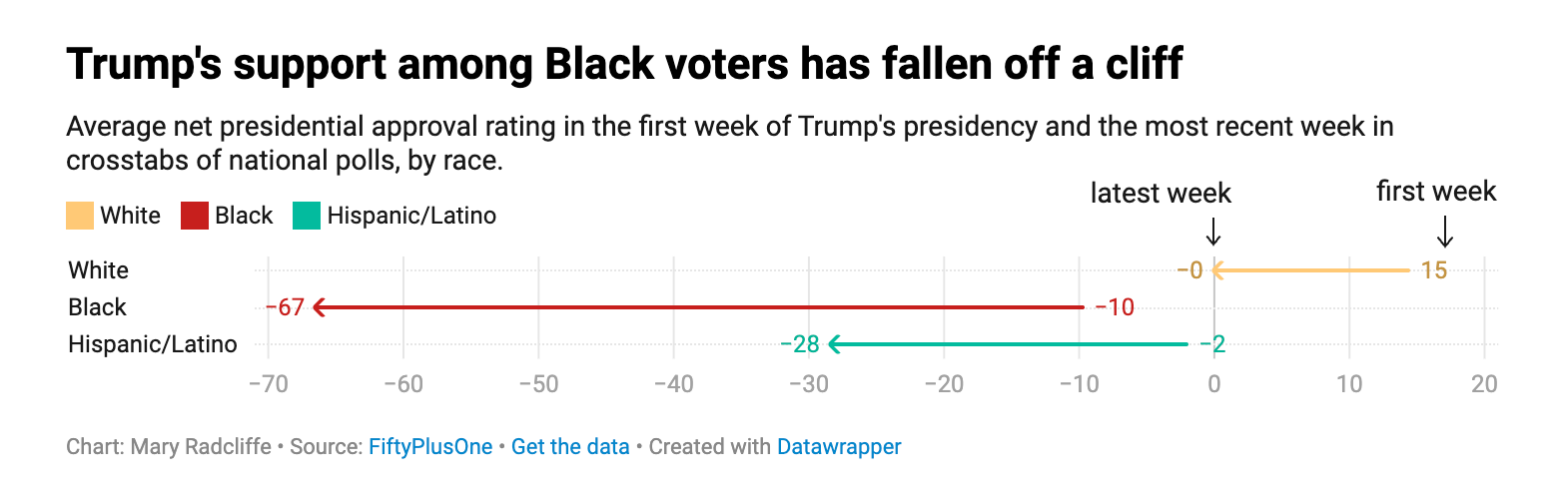
Now that Trump has in fact utterly failed to deliver, those voters — especially those Black and Latino voters who believed him — have swung back to the Democrats with a vengeance:
Trump is handling this reversal with his usual style and grace: in the past few days he has repeatedly called affordability a “hoax” and a “con job.” According to Axios, he’s planning a nationwide retribution tour to convince voters that things are going great and that they’re wrong to be so down on the economy. Democratic strategists must be rubbing their hands with glee.
And if you are one of those Republicans reconsidering your future career options, know that things are going to get worse. A lot worse.
Lately I’ve been revisiting the work of the political scientist Suzanne Mettler. Mettler asked why so many people who are dependent on government social programs vote for conservatives who want to slash those programs. She focused in particular on Kentucky, where 28 percent of the population is covered by Medicaid, yet which gave Trump a more than 30 point margin last year.
My quick summary of Mettler’s analysis emphasizes two points. First, many people who benefit from government social programs don’t actually think of them as social programs. This is true not only for implicit aid like the tax exemptions for mortgage interest payments and employer-provided health insurance, but also for explicit aid programs like Medicare and Social Security. What Mettler documented is that many people who depend on government benefits don’t consider them “benefits” but rather something they’ve earned.
Second, Mettler documented that recipients of means-tested government benefits such as Medicaid and food stamps are relatively poor, less educated, and often fail to vote.
I will add a third point: Most Americans aren’t close followers of policy debates. Telling them how an election promise is likely to affect their future benefits simply doesn’t register for most people. Instead, there has be a clear demonstration of the policy change before it is made real to them. Take the example of Obamacare, which was famously unpopular before it went into effect. But once people experienced the benefits of Obamacare it went on to garner very strong public support. Furthermore, most people don’t mobilize in support of popular programs until it’s very obvious that they’re under imminent threat. Trump’s anti-Obamacare rhetoric during the 2016 campaign didn’t appear to hurt him, but his actual attempt to kill the program in 2017 helped Democrats win big in the 2018 midterms.
Which brings us to the health care earthquake that’s soon to hit — an earthquake that, based on my read of Mettler, is going to inflict significant political damage on the Republicans.
For those who haven’t been keeping up: The Affordable Care Act requires that health insurance companies offer the same policies to everyone, with no discrimination based on pre-existing conditions. It also provides significant subsidies to help people pay insurance premiums — specifically, limiting the amount families have to pay out of pocket as a percentage of their income — with the subsidies on a sliding scale based on income. These subsidies have an important secondary benefit: They encourage even healthy people to buy insurance, which improves the risk pool and therefore holds overall premiums down.
Mandatory disclaimer for liberals: Yes, it would be much simpler just to have single-payer healthcare, paid for with progressive taxes. But that wasn’t politically possible when Obamacare was created, and it still isn’t. Obamacare was more or less the best we could get.
As originally drafted, however, Obamacare was underpowered and underfinanced. Insurance was still hard for many Americans to afford, even with the subsidies. And there was an upper income limit for the subsidies: you still received substantial support as long as your income was less than four times the poverty line, but as soon as you crossed that line all support was cut off. This is the kind of “notch” everyone who studies tax and benefit policy is adamant that you want to avoid.
So in 2021 the Biden administration enhanced the subsidies. Out of pocket payments were reduced for everyone. And the “notch” was eliminated: maximum premium payments as a percentage of income were capped no matter how high one’s income was, although this limit wasn’t relevant for the truly affluent.
But the legislation providing these enhanced subsidies expires at the end of this month. And Republicans in Congress are adamantly opposed to maintaining them. Even Trump has pleaded with his party to agree to a temporary extension, but seems to be getting nowhere. Visceral GOP dislike for anything that helps ordinary Americans may be partly to blame. Moreover, bolstering the ACA would be an implicit admission by the Republicans that they have been wrong all along about health care.
So let’s think about the politics of what’s about to happen: Millions of Americans are about to see a sudden rise in health care costs — not a hypothetical future rise, but a sudden jump on January 1.
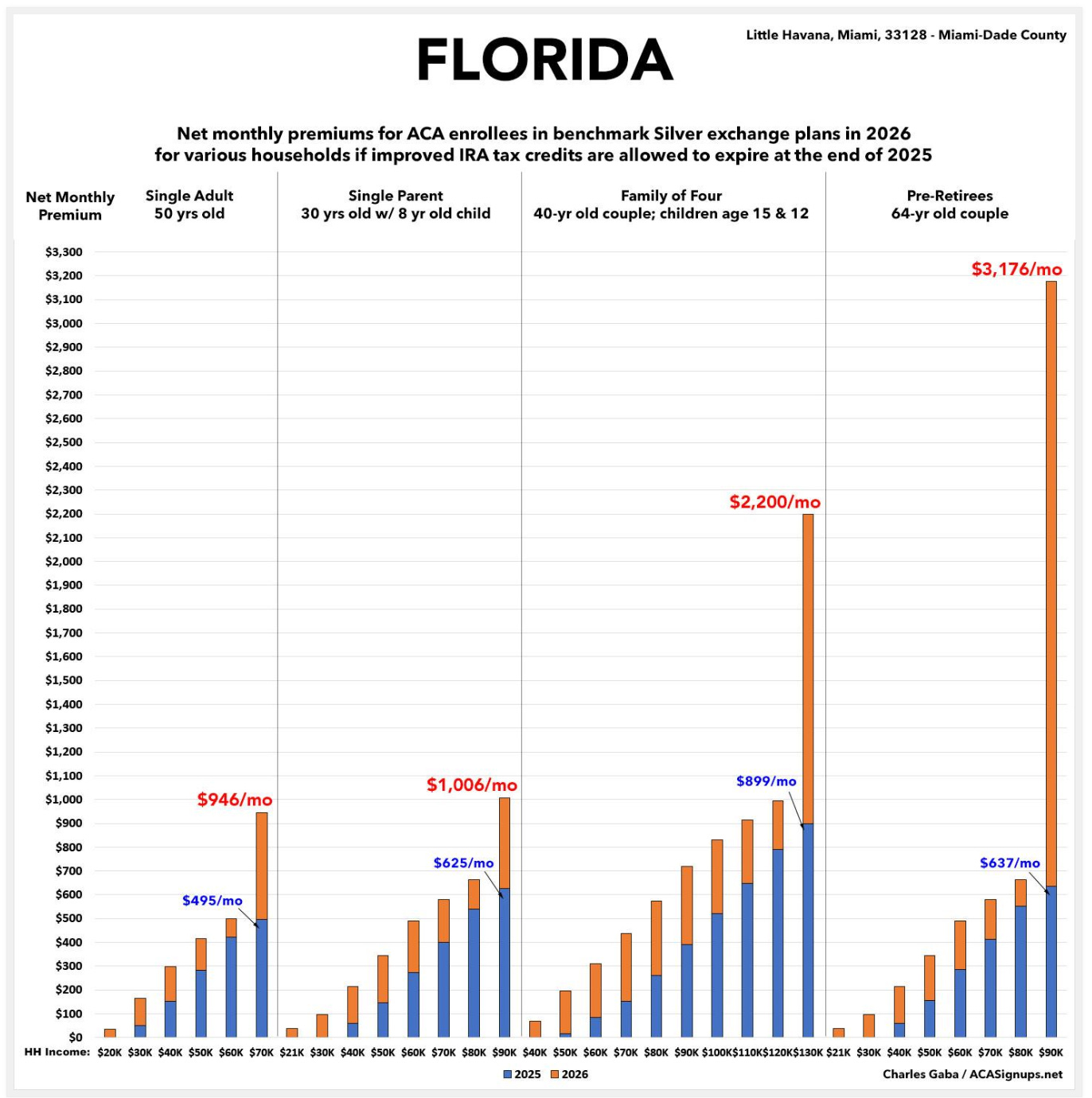
Almost all ACA enrollees will be paying more. However, the really huge premium increases will fall on older Floridians who are relatively well off — that is, those with incomes above the maximum allowable to receive subsidies. According to Gaba, these people are likely to see their insurance bills rising by more than $2500 a month — more than $30,000 a year! And these people, unlike many Medicaid or food stamp beneficiaries, have a high propensity to vote.
This ACA premium shock will hit as other forces are exacerbating the sense of crisis over affordability. Businesses are starting to fully pass onto consumers the cost of Trump’s tariffs. Electricity prices are soaring as data centers inflict the cost of their enormous power demands on consumers. In addition, Trump’s deportation policies are increasing the cost of food.
Trump may believe that affordability is a con job, but it isn’t. It’s going to hit him and his allies hard. And it couldn’t happen to a more deserving group of people.
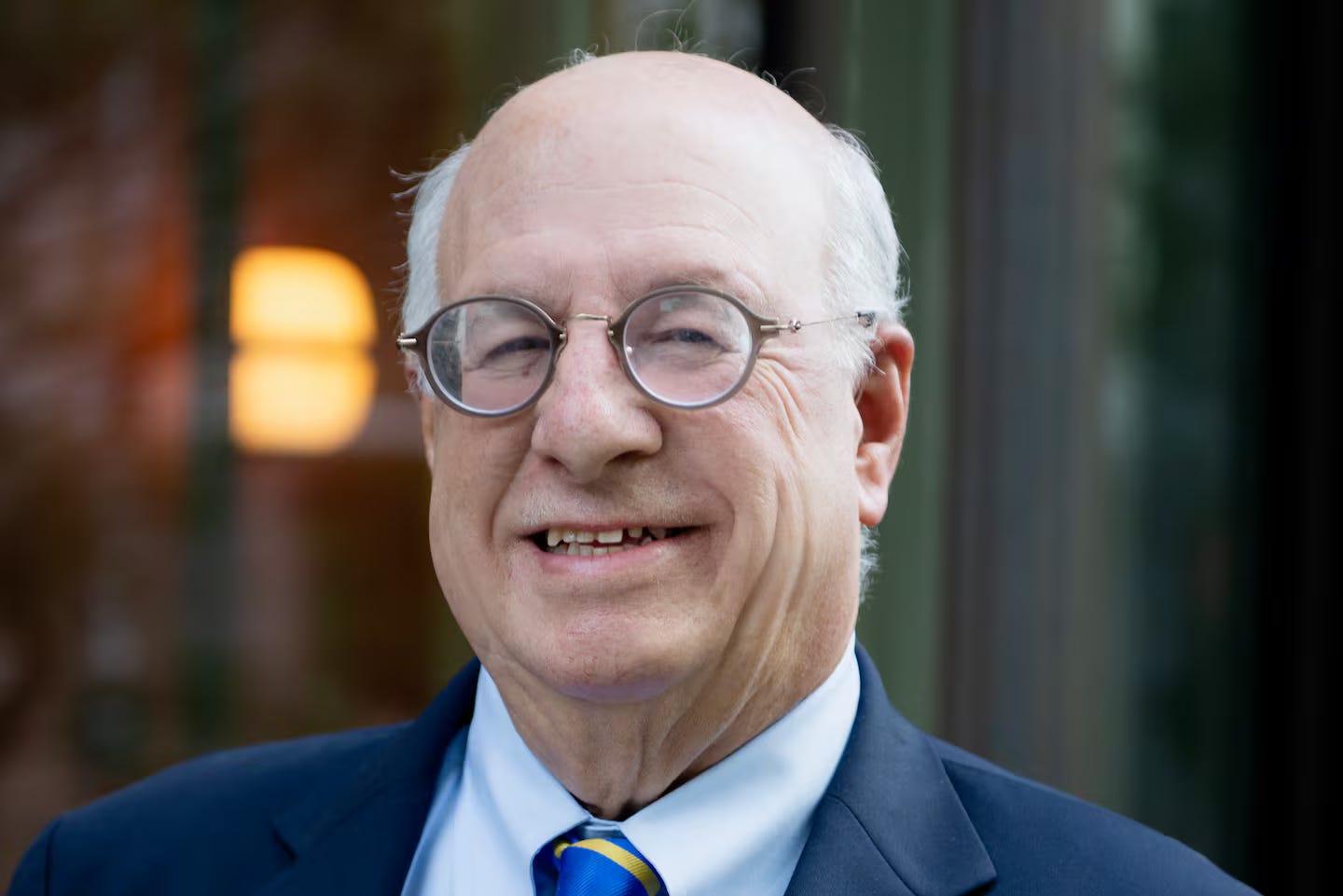
Today I want to share with you a statement by former federal judge Mark L. Wolf explaining why he resigned from the federal bench in early November. I found it sobering and troubling. The statement appeared in The Atlantic.
By way of background, Wolf served in Gerald Ford’s Justice Department at the same time I did, under Attorney General Edward Levi, who had been president of the University of Chicago. (I was assistant to the solicitor general; Wolf was special assistant to then-Deputy Attorney General Laurence Silberman — later a federal appeals court judge — and Edward Levi.) It was a time when Levi and the department struggled to recover public trust after the Watergate scandal.
Wolf went on to lead the public corruption unit at the U.S. attorney’s office in Boston, securing more than 40 convictions, including of officials close to Democratic Mayor Kevin White. Ronald Reagan named Wolf to the federal bench in 1985. He has been considered a conservative jurist.
***
Why I Am Resigning
By Mark L. Wolf
In 1985, President Ronald Reagan appointed me as a federal judge. I was 38 years old. At the time, I looked forward to serving for the rest of my life. However, I resigned Friday, relinquishing that lifetime appointment and giving up the opportunity for public service that I have loved.
My reason is simple: I no longer can bear to be restrained by what judges can say publicly or do outside the courtroom. President Donald Trump is using the law for partisan purposes, targeting his adversaries while sparing his friends and donors from investigation, prosecution, and possible punishment. This is contrary to everything that I have stood for in my more than 50 years in the Department of Justice and on the bench. The White House’s assault on the rule of law is so deeply disturbing to me that I feel compelled to speak out. Silence, for me, is now intolerable.
When I accepted the nomination to serve on the U.S. District Court in Massachusetts, I took pride in becoming part of a federal judiciary that works to make our country’s ideal of equal justice under law a reality. A judiciary that helps protect our democracy. That has the authority and responsibility to hold elected officials to the limits of the power delegated to them by the people. That strives to ensure that the rights of minority groups, no matter how they are viewed byothers, are not violated. That can serve as a check on corruption to prevent public officials from unlawfully enriching themselves. Becoming a federal judge was an ideal opportunity to extend a noble tradition that I had been educated by experience to treasure.
My public service began in 1974, near the end of Richard Nixon’s presidency, at a time of dishonor for the Department of Justice. Nixon’s first attorney general, John Mitchell, who had also been the president’s campaign manager, later went to prison for his role in the break-in at the Democratic headquarters at the Watergate complex and for perjury in attempting to cover up that crime. His successor, Richard Kleindienst, was convicted of contempt of Congress for lying about the fact that, as instructed by the president, he’d ended an antitrust investigation of a major company after it pledged to make a $400,000 contribution to the Republican National Convention. The Justice Department was also discredited by revelations that FBI Director J. Edgar Hoover had obtained and disseminated derogatory information about political adversaries, including Martin Luther King Jr.
I joined the Department of Justice as a special assistant to the honest and able Deputy Attorney General Laurence Silberman. Soon after, in 1975, President Gerald Ford named Edward Levi as attorney general to restore confidence in the integrity of the department. Levi, then the president of the University of Chicago, had a well-deserved reputation for brilliance, honesty, and nonpartisanship. Ford told Levi that he wanted the attorney general to “protect the rights of American citizens, not the President who appointed him.”
I organized Levi’s induction ceremony and was there when he declared that “nothing can more weaken the quality of life or more imperil the realization of the goals we all hold dear than our failure to make clear by word and deed that our law is not an instrument of partisan purpose.” For the next two years I served as one of Levi’s special assistants, working closely with a man who was always faithful to this principle.
With Levi as my model, in 1981 I became the deputy United States attorney and chief federal prosecutor of public corruption in Massachusetts. In about four years, my assistants and I won more than 40 consecutive corruption cases. Many convictions were of defendants close to the powerful mayor of Boston at the time. As a result, I received the Attorney General’s Distinguished Service Award and was appointed a federal judge.
Some of the cases over which I presided as judge involved corruption and were highly publicized. Most notable was the prosecution of the notorious Boston mobsters James “Whitey” Bulger and Stephen “the Rifleman” Flemmi. Both, it turned out, were also FBI informants. Agents in the bureau, I discovered, were involved in crimes and egregious misconduct, including murders committed by Bulger and Flemmi. I wrote a 661-page decision detailing my findings. This led to orders that the government pay more than $100 million to the families of people murdered by informants whom the FBI had improperly protected. Their FBI handler was convicted twice and sentenced to serve a total of 50 years in prison.
I also presided over a six-week trial of a former speaker of the Massachusetts House of Representatives. After he was convicted of demanding and accepting bribes, I sentenced him to serve eight years in prison.
I decided all of my cases based on the facts and the law, without regard to politics, popularity, or my personal preferences. That is how justice is supposed to be administered—equally for everyone, without fear or favor. This is the opposite of what is happening now.
As I watched in dismay and disgust from my position on the bench, I came to feel deeply uncomfortable operating under the necessary ethical rules that muzzle judges’ public statements and restrict their activities. Day after day, I observed in silence as President Trump, his aides, and his allies dismantled so much of what I dedicated my life to.
When I became a senior judge in 2013, my successor was appointed, so my resignation will not create a vacancy to be filled by the president. My colleagues on the United States District Court in Massachusetts and judges on the lower federal courts throughout the country are admirably deciding a variety of cases generated by Trump’s many executive orders and other unprecedented actions. However, the Supreme Court has repeatedly removed the temporary restraints imposed on those actions by lower courts in deciding emergency motions on its “shadow docket” with little, if any, explanation. I doubt that if I remained a judge I would fare any better than my colleagues.
Others who have held positions of authority, including former federal judges and ambassadors, have been opposing this government’s efforts to undermine the principled, impartial administration of justice and distort the free and fair functioning of American democracy. They have urged me to work with them. As much as I have treasured being a judge, I can now think of nothing more important than joining them, and doing everything in my power to combat today’s existential threat to democracy and the rule of law.
What Nixon did episodically and covertly, knowing it was illegal or improper, Trump now does routinely and overtly. Prosecutorial decisions during this administration are a prime example. Because even a prosecution that ends in an acquittal can have devastating consequences for the defendant, as a matter of fairness Justice Department guidelines instruct prosecutors not to seek an indictment unless they believe there is sufficient admissible evidence to prove guilt beyond a reasonable doubt.
Trump has utterly ignored this principle. In a social-media post, he instructed Attorney General Pam Bondi to seek indictments against three political adversaries even though the officials in charge of the investigations at the time saw no proper basis for doing so. It has been reported that New York Attorney General Letitia James was prosecuted for mortgage fraud after Deputy Attorney General Todd Blanche, one of Donald Trump’s former criminal-defense lawyers, questioned the legal viability of bringing charges against James. Former FBI Director James Comey was charged after the interim U.S. attorney who had been appointed by Trump refused to seek an indictment and was forced to resign. Senator Adam Schiff, the third target of Trump’s social-media post, has yet to be charged.
Trump is also dismantling the offices that could and should investigate possible corruption by him and those in his orbit. Soon after he was inaugurated, Trump fired, possibly unlawfully, 18 inspectors general who were responsible for detecting and deterring fraud and misconduct in major federal agencies. The FBI’s public-corruption squad also has been eliminated. The Department of Justice’s public-integrity section has been eviscerated, reduced from 30 lawyers to only five, and its authority to investigate election fraud has been revoked.
The Department of Justice has evidently chosen to ignore matters it would in the past have likely investigated. Some directly involve the president. It has been reported that at a lavish April 2024 dinner at Mar-a-Lago, after executives from major oil companies complained about how the Biden administration’s environmental regulations were hurting their businesses, Trump said that if they raised $1 billion for his campaign he would promptly reverse those rules and policies. The executives raised the money, and Trump delivered on his promise. The law may be unclear concerning whether Trump himself could have been charged with conspiracy to bribe a public official or honest-services fraud. In addition, Trump himself may have immunity from prosecution if similar payments for his benefit continued after he became president. However, the companies that made the payments, and the individuals acting for them, could possibly be prosecuted. There is no public indication that this matter has been investigated by Trump’s Department of Justice.
As a prosecutor and judge I dealt seriously with the unlawful influence of money on official decisions. However, Trump and his administration evidently do not share this approach. After Trump launched his own cryptocurrency, $TRUMP, his Department of Justice disbanded its cryptocurrency-enforcement unit. The top 220 buyers of Trump’s cryptocurrency were invited to a dinner with Trump. Sixty-seven of them had invested more than $1 million. The top spender, Justin Sun, who was born in China and is a foreign national, reportedly spent more than $10 million. Sun also reportedly spent $75 million on investments issued by a crypto company controlled by Trump’s family. It is illegal for people who are not U.S. citizens to donate to American political candidates, and the most that anyone can donate directly to one candidate is $3,500. Ordinarily, the Department of Justice would investigate this sort of situation. There is, however, no indication that any investigation has occurred. Rather, a few months after Sun started purchasing tokens from the Trump-family cryptocurrency company, the Securities and Exchange Commission paused its fraud suit against Sun and his companies pending the outcome of settlement negotiations. (Sun and his companies have denied any wrongdoing.)
Trump is not the only member of his administration whose conduct is apparently shielded from investigation. In September of last year, Tom Homan, who became Trump’s “border czar,” reportedly was recorded accepting $50,000 in cash in return for a promise to use his potential future public position to benefit a company seeking government contracts. The FBI had created the fictitious company as part of an undercover investigation. Typically, an investigation of that sort would have continued after Homan became a Department of Homeland Security official, with the FBI seeking any additional evidence of bribery. However, after Trump took office, the investigation was shut down, with the White House claiming there was no “credible evidence” of criminal wrongdoing. Weeks after the FBI investigation was reported, Homan denied taking $50,000 “from anybody” and has said he did “nothing criminal.” An honest investigation could reveal who is telling the truth.
There is also the matter of Trump’s executive orders. A good number are, in my opinion, unconstitutional or otherwise illegal. For example, contrary to the express language of the Fourteenth Amendment, one order declares that not everyone born in this country is a U.S. citizen. Trump’s administration also has deported undocumented immigrants without due process, in many cases to countries where they have no connections and will be in great danger. Although many federal judges have issued orders restraining the government’s effort to implement those executive orders, some appear to have been disobeyed by members of the Trump administration. Trump has responded by calling for federal judges to be impeached, even though the Constitution permits impeachment only for “high crimes and misdemeanors,” such as treason and bribery.
Trump’s angry attacks on the courts have coincided with an unprecedented number of serious threats against judges. There were nearly 200 from March to late May 2025 alone. These included credible death threats, hundreds of vitriolic phone calls, and anonymous, unsolicited pizza deliveries falsely made in the name of the son of a federal judge, who was murdered in the judge’s home in 2020 by a disgruntled lawyer.
Over the past 35 years I have spoken in many countries about the role of American judges in safeguarding democracy, protecting human rights, and combatting corruption. Many of these countries—including Russia, China, and Turkey—are ruled by corrupt leaders who rank among the worst abusers of human rights. These kleptocrats jail their political opponents, suppress independent media that could expose their wrongdoing, forbid free speech, punish peaceful protests, and frustrate every effort to establish an independent, impartial judiciary that could constrain these abuses. These kleptocrats have impunity in their countries because they control the police, prosecutors, and courts.
In my work around the world, I have made many friends, young and old, who have been inspired by the example of American judges, lawyers, and citizens. They have suffered greatly for trying to make their countries more like ours. Among them are impartial judges who have been imprisoned in Turkey, a brilliant young Russian lawyer who was alleged to be a spy and forced into exile, and a Venezuelan law student who almost lost sight in one eye while protesting his country’s oppressive government. They courageously share what have historically been our nation’s convictions. These brave people inspire me.
I resigned in order to speak out, support litigation, and work with other individuals and organizations dedicated to protecting the rule of law and American democracy. I also intend to advocate for the judges who cannot speak publicly for themselves.
I cannot be confident that I will make a difference. I am reminded, however, of what Senator Robert F. Kennedy said in 1966 about ending apartheid in South Africa: “Each time a man stands up for an ideal, or acts to improve the lot of others, or strikes out against injustice, he sends forth a tiny ripple of hope.” Enough of these ripples can become a tidal wave.
And as Nobel Laureate Seamus Heaney wrote, sometimes the “longed-for tidal wave of justice can rise up, and hope and history rhyme.” I want to do all that I can to make this such a time.
On Monday, the social media account of Pete Hegseth’s so-called “Department of War” posted that the department is investigating Senator Mark Kelly, a retired Navy officer.
Kelly’s supposed offense? He participated in a video reminding members of the armed forces that they have no duty to follow illegal orders — a concept enshrined in the Code of Military Justice, the shameful case of Lt. William Calley during the Vietnam War, the Geneva Conventions, and the Nuremberg Trials.
I’ve known Mark for several decades. I saw him pilot rockets into space. I gave a blessing at his marriage to Gabby Giffords.
I visited with Mark soon after Gabby was shot. He was brave, steadfast. If she survived (which wasn’t at all clear at the time), he was determined to go on with their lives together, doing whatever needed to be done. He has done that. Today, although not entirely recovered, she lives a reasonably full life, and they continue to support each other in every way.
When Mark ran for Senate, he was equally determined to go on with the work Gabby had begun as a member of Congress.
Few people are more dedicated to the ideals of America and the principles of the Constitution than Mark Kelly.
As for Pete Hegseth, well, the less said the better.
The contrast between Mark Kelly and Pete “Whiskeyleaks” Hegseth or Donald “Bonespurs” Trump couldn’t be larger.
The social media announcement put out by Hegseth’s “Department of War” mentioned “serious allegations of misconduct” against Kelly, suggesting that Kelly could be recalled to active duty “for court-martial proceedings or administrative measures.”
This is a dangerous move — almost as dangerous as putting federal troops into American cities over the objections of their mayors and governors or killing sailors on vessels in international waters because they’re “suspected” of smuggling drugs.
Trump likes military tribunals because they don’t require the same extent of due process as regular trials — and Trump has shown his contempt for due process. In the 2024 presidential campaign, Trump called for those he perceives to be his enemies to be prosecuted in military tribunals. He said former representative Liz Cheney was “guilty of treason” because she participated in the House Select Committee to Investigate the January 6th Attack on the U.S. Capitol.
Kelly has posted:
“When I was 22 years old, I commissioned as an Ensign in the United States Navy and swore an oath to the Constitution. I upheld that oath through flight school, multiple deployments on the USS Midway, 39 combat missions in Operation Desert Storm, test pilot school, four space shuttle flights at NASA, and every day since I retired—which I did after my wife Gabby was shot in the head while serving her constituents.
“In combat, I had a missile blow up next to my jet and flew through anti-aircraft fire to drop bombs on enemy targets. At NASA, I launched on a rocket, commanded the space shuttle, and was part of the recovery mission that brought home the bodies of my astronaut classmates who died on Columbia. I did all of this in service to this country that I love and has given me so much.
“Secretary Hegseth’s tweet is the first I heard of this. I also saw the President’s posts saying I should be arrested, hanged, and put to death.
“If this is meant to intimidate me and other members of Congress from doing our jobs and holding this administration accountable, it won’t work. I’ve given too much to this country to be silenced by bullies who care more about their own power than protecting the Constitution.”
Today, Kelly refuses to be silenced by a disreputable secretary of defense and a twice-impeached occupant of the Oval Office who’s been convicted of 34 felonies.
I believe Mark Kelly would make an excellent president.
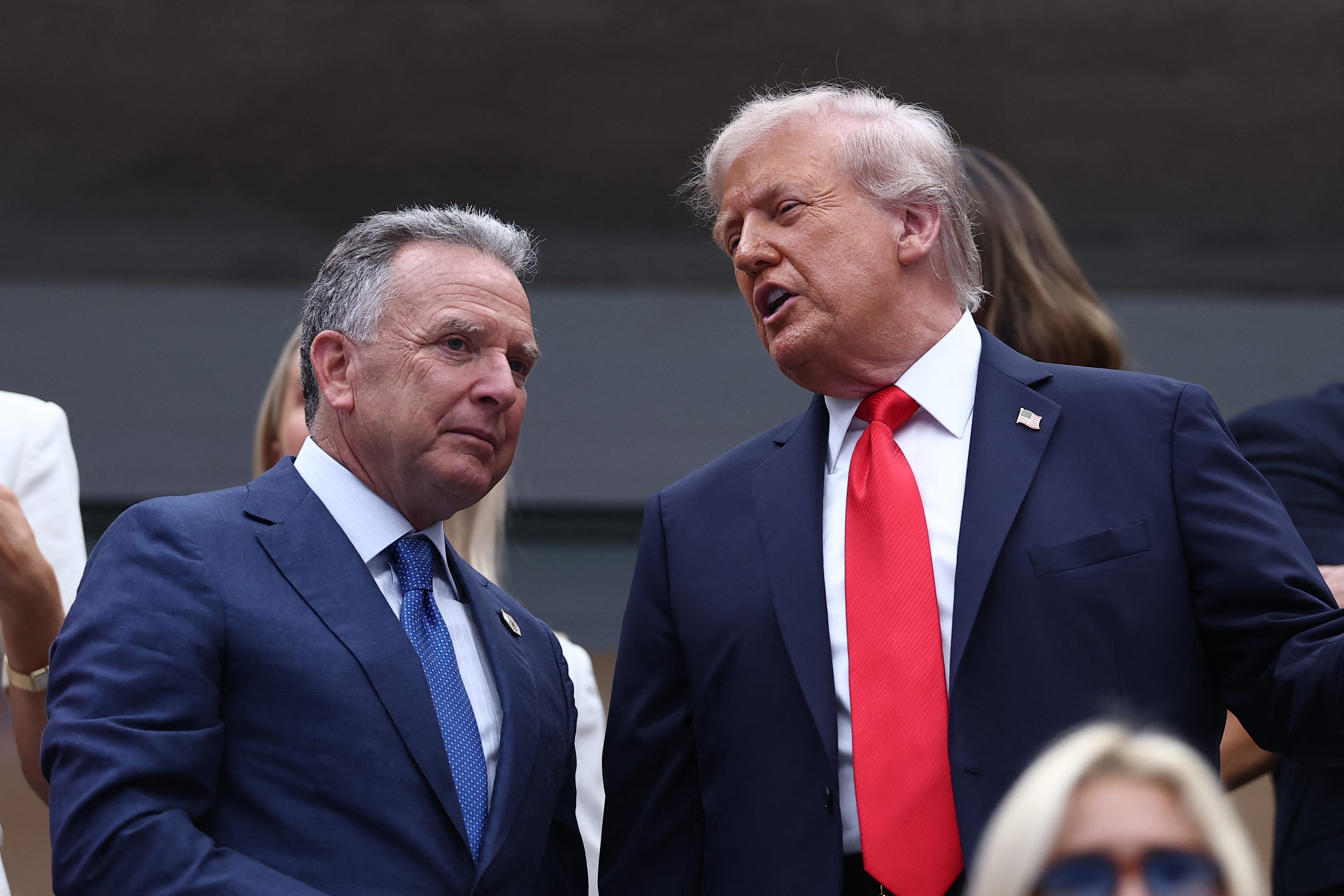
Donald Trump and his special envoy Steve Witkoff. Caption: Getty Images
We tend to digest the news in small bites because, as has been said, the news is the first draft of history. But sometimes we need to step back and take a look at the wide shot to understand the broader implications of what is going on and why.
The president was elected by followers who bought the whole “make America great” scheme hook, line, and sinker. That hasn’t happened. Instead of a country in the throes of greatness, most economic indicators are pointing in the same direction as the president’s approval rating — straight down. Meanwhile, beyond our borders, chaotic is a charitable description of America’s international relations.
Less than a year into the second Trump term, the long view of American foreign policy, if you can even call it by such sober terminology , is a confusing jumble of transactional moves with no through line.
It’s guided by the whims du jour of our allegedly “America First” president. Even if you don’t agree with his isolationist stance, it is a definable policy, but one that he seems to have abandoned on a whim.
This president – aided by his business cronies with no diplomatic or foreign policy experience – has systematically put this country in the precarious position of being less safe than it was on Inauguration Day.
The United States has long relied on trust and credibility in diplomatic relations. Don’t look now, but most world leaders are laughing at the idea that the United States is a reliable partner. The one-sided attempt to end the Russia-Ukraine war is an example of an administration that has lost its way and its reputation around the world.
For months, the president has been trying to broker a “peace” deal between Ukraine and Russia. Just a reminder, it was Russia that illegally invaded the sovereign nation of Ukraine in February 2022. Ukrainian President Volodymyr Zelensky agreed to a ceasefire months ago, one that Russian President Vladimir Putin has continued to violate. And now Putin believes he is entitled to a myriad of concessions from Ukraine and the world.
“Peace” plan is the Trump administration’s nomenclature. It is not a peace plan, it is a surrender plan being foisted on the Ukrainians, the victims, who have not even been invited to the negotiating table.
The back-and-forth over the plan and who is actually leading the negotiations is dizzying. Reuters reported on Wednesday that the origins of the U.S.-sanctioned 28-point plan, which was made public last week, came directly from Russia.
How did it get handed off to the Americans? By way of Steve Witkoff, a billionaire New York real estate developer whose son is a co-founder of Trump’s cryptocurrency company, and the president’s son-in-law Jared Kushner, who was supposed to be out of government affairs. In October, they met with Kirill Dmitriev, the head of Russia’s sovereign wealth fund. Over several days in Miami, they crafted the Russia-Ukraine plan and discussed future business deals, according to The Wall Street Journal.
Let that sink in. This enormously important deal, to end a horrific war that has vast implications for the security of Ukraine, Europe, and the rest of the world, was written by a Putin stooge and two pro-Russia American billionaires whose goal in life is to enrich themselves, not by the Secretary of State.
The actual Secretary of State, Marco Rubio, who apparently didn’t know about the draft of the deal, is now trying to insert himself into the process, but with little success.
Hold on. There’s more. Today Bloomberg reported, and the White House didn’t deny, details of a leaked phone call between Whitkoff and Dmitriev, instructing the Russian on how to coach Putin to sell the deal to Trump. You can’t make it up!
A Republican in Congress said Whitkoff can’t be trusted to lead the negotiations. Rep. Don Bacon from Illinois admonished, “Would a Russian paid agent do less than [Witkoff]? He should be fired.”
This is the same Witkoff who has been heavily involved in Middle East peace negotiations. The United Nations reports both sides have violated the recently agreed-upon Gaza ceasefire hundreds of times.
One of the most concerning aspects of the possible Russian plan is what it means for NATO, the North Atlantic Treaty Organization. Founded in response to the atrocities of the Second World War, NATO is an alliance of 32 countries whose core principle is collective defense. An attack against one member is considered an attack against all.
Europe is still stinging from the administration’s anti-European rhetoric. From JD Vance’s attacks on U.S. allies at a security conference in Germany, to Trump and Vance bullying Zelensky in the Oval Office, to Trump’s devastating tariffs, which are jeopardizing $9.5 trillion in annual trade, the administration’s actions send a clear message: the U.S. is no longer loyal to its European partners.
And those partners are rightfully nervous. The German Foreign Minister warned this week his country’s intelligence assessments point to Russia planning to invade a NATO country by 2029. Who really thinks Putin will stop in Ukraine? Moscow must be giddy over Trump 2.0.
Trump has further damaged American interests abroad by boycotting two international summits. The first, the G20 Summit, an economic forum of the world’s top economic powers, was held in Johannesburg, South Africa last weekend.
Trump’s stated reason for not going is the widely discredited claim that South Africa’s white farmers are victims of discrimination , the same logic he employed to give preferential treatment to white South Africans in the U.S.’s greatly diminished refugee program.
Besides showing the world just how racist he is, absenting the U.S. from such an important meeting is a gift to our biggest rival, China. The same can be said about Trump’s decision to skip COP30, the annual United Nations climate change conference. It was the first time in 30 years that the U.S. government has not attended.
A quote often credited to famed former Texas governor Anne Richards is more than apropos in this moment: “If you’re not at the table, you’re on the menu.”
As Trump continues to rack up losses at home, his desire to assert himself abroad grows by the day. We are seeing it play out in the chaos he is causing in South America, pushing for regime change in Venezuela.
The administration has designated the Cartel de los Soles, which it claims is headed by President Nicolás Maduro, a foreign terrorist organization. This gives U.S. law enforcement broader powers to combat it. The only problem is, the cartel reportedly doesn’t actually exist. The Cartel de los Soles is a name Venezuelan journalists use to label corrupt members of their country’s military.
The efforts to oust Maduro are further rankling Trump’s America First-MAGA loyalists and threatening the stability of the region. But when it comes down to it, what Trump really wants is Venezuela’s oil.
The amount of self-serving corruption that the Trump administration has brought to American foreign policy in just 10 months is staggering in its width and depth . With no guard rails and his two closest lieutenants, Vance and Rubio, jockeying for position of heir apparent, there is no reason to think things are going to improve.
And all this doesn’t dwell on tariffs, especially with China. Since “liberation day” last April, Trump’s tariffs have pushed prices in the U.S. higher. That’s what tariffs do. But we’ll save that for another time. For the moment, we’ll just note that early indications suggest that China is the big winner in Trump’s tariff wars, and that America is fast losing respect and influence around the world. We are weaker internationally than we were when this president first took office.
As we pause to celebrate Thanksgiving, I’d like to take a moment to say thank you. I’m so proud of the Steady community for your engagement, passion, and love of our country.
Your comments fill my heart and keep me going.
Our mission at Steady is to provide you with reliable information with context and perspective. Information is power, especially in a world that is littered with those who intentionally misinform. Truth is a powerful force.
I’m a firm believer in old-fashioned “shoe leather” reporting, when journalists walked the halls of power with a notepad and pen in hand. It has been diluted, but it is still being practiced today, even if the shoes are different, and the notepads have been replaced by smartphones. Good journalism has never been more important. Please enjoy the holiday and we’ll be back on Sunday with a Reason to Smile.
Steady is free, but to support my team’s efforts to protect our democracy through the power of independent journalism, we’d appreciate it if you would consider joining as a paid subscriber. It keeps Steady sustainable and accessible for all.
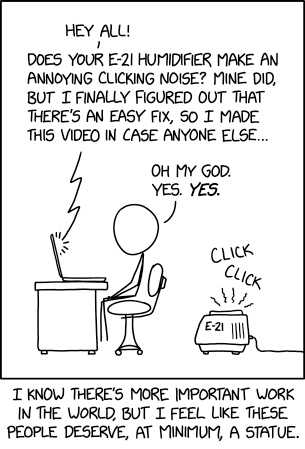
The statue should be in the likeness of whatever sculptor posted the sculpting tool repair video that was most helpful during the installation of the statue.
 Log in



 The venomous stinger of an northern giant hornet (Vespa mandarinia). The venom injected by this stinger can cause sharp, intense pain as well as local tissue damage and systemic effects such as destruction of red blood cells and cardiac dysfunction, which may even be fatal. Credit: Shinji Sugiura / Ecosphere
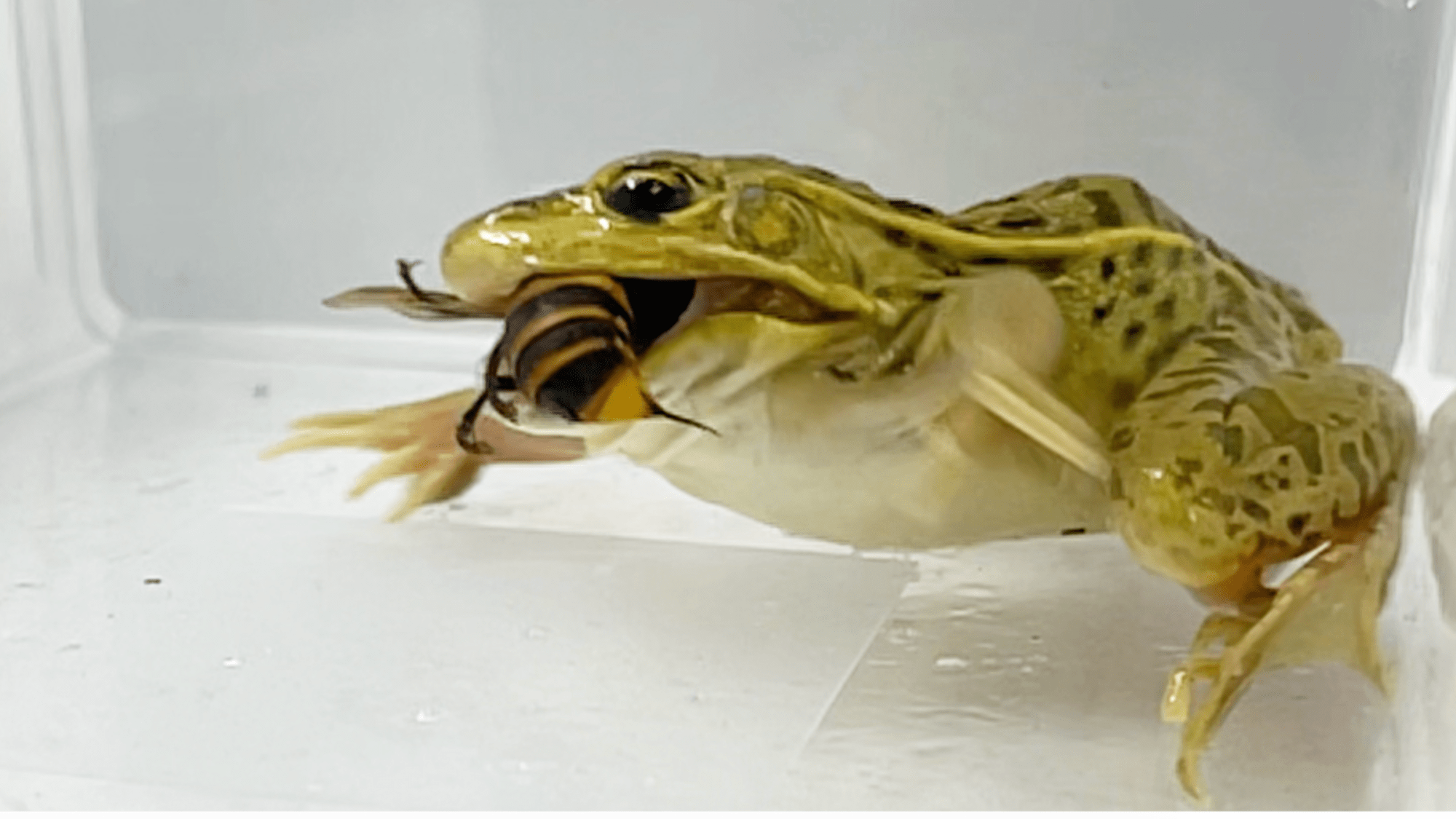 Frogs may have evolved to tolerate both the hornet venom and its resulting pain. Credit: Shinji Sugiura, Ecosphere